
Insight
How AI Improves Search Accuracy in Internal Knowledge Systems

Enterprise organizations don't suffer from a lack of information. They suffer from information fragmentation.
Critical knowledge is often scattered across ERP systems, groupware platforms, shared drives, PDFs, spreadsheets, and internal wikis. As a result, employees spend valuable time searching for files, validating information, and comparing data across multiple systems.
Traditional enterprise search tools rely heavily on keyword matching. This means users often need to know the exact file name or wording used in a document.
For example, an employee searching for "vendor payout policy" may never find a document called "Partner Settlement Guidelines" even though it contains the information they need.
This is where AI-powered enterprise search changes the experience.
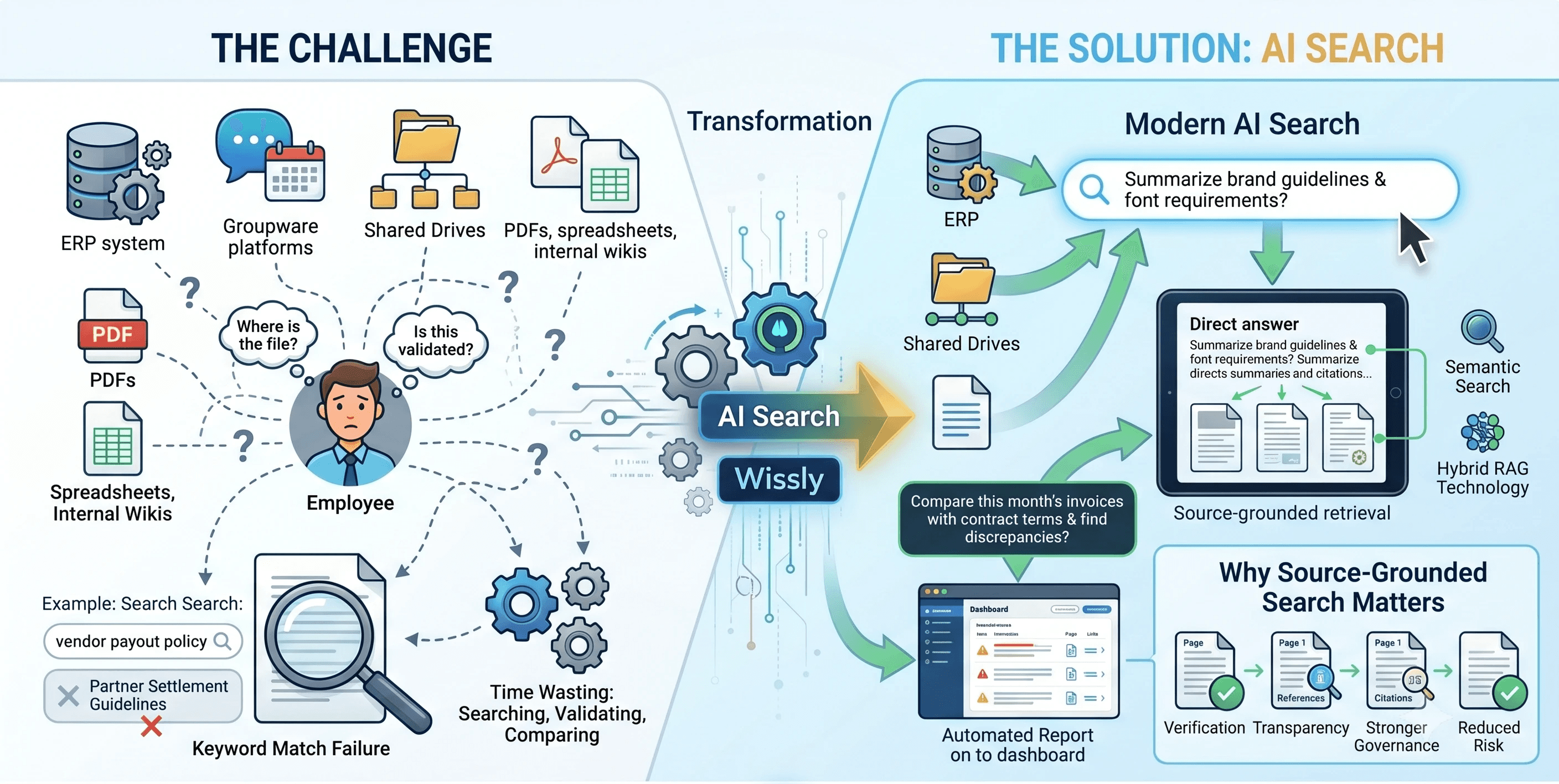
From Keyword Search to Semantic Search
Modern AI search understands meaning rather than simply matching words.
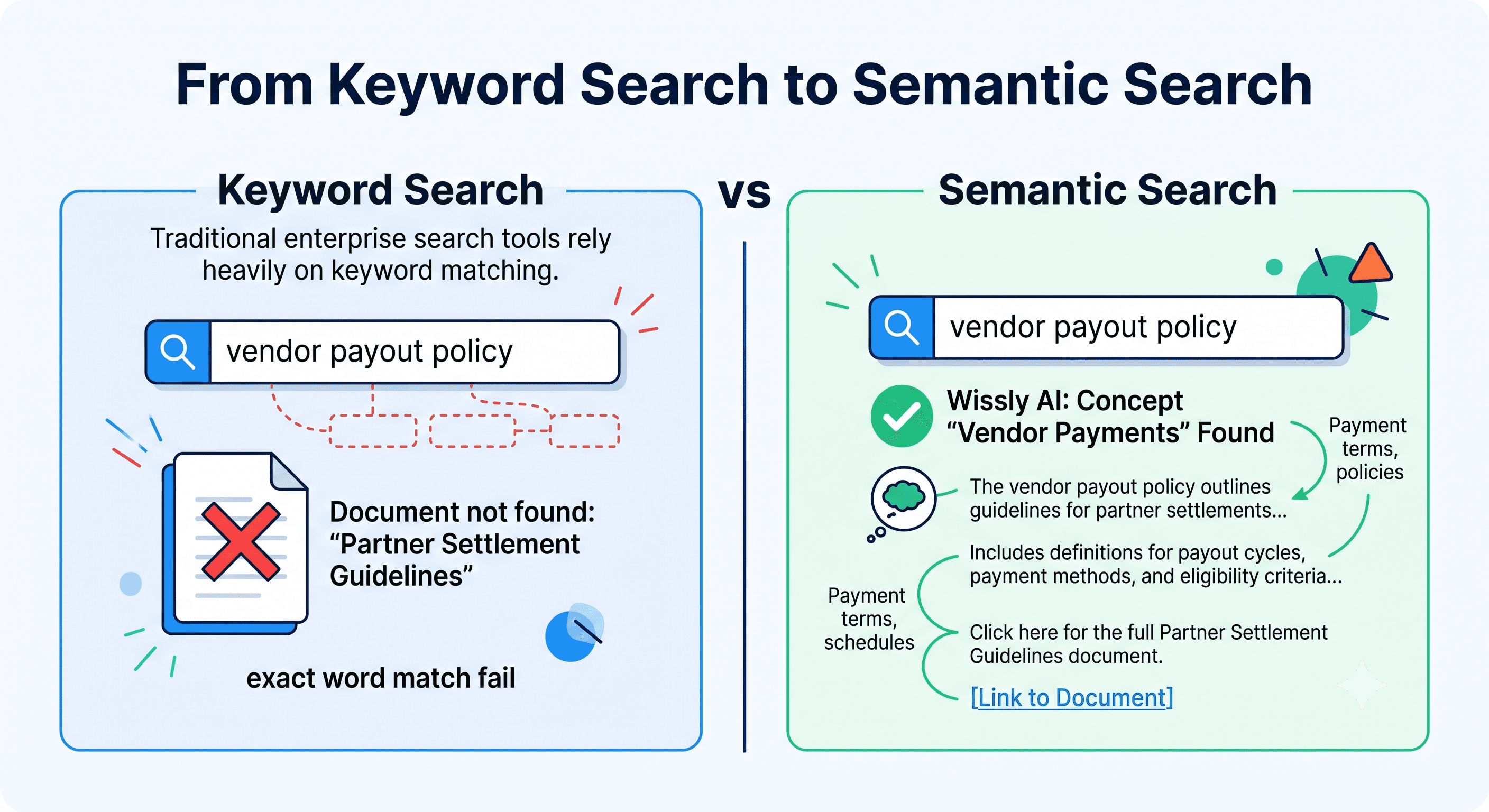
Instead of searching for exact phrases, it identifies user intent and retrieves relevant information from multiple sources, including:
ERP systems
Groupware platforms
Shared drives
PDF documents
Excel spreadsheets
PowerPoint presentations
HWP files
Users can ask questions naturally:
"Summarize the latest brand guideline and show the font requirements."
Rather than manually opening multiple files, employees receive a direct answer linked to the original source.
Connecting Structured and Unstructured Data
Many business processes require information from both structured and unstructured sources.
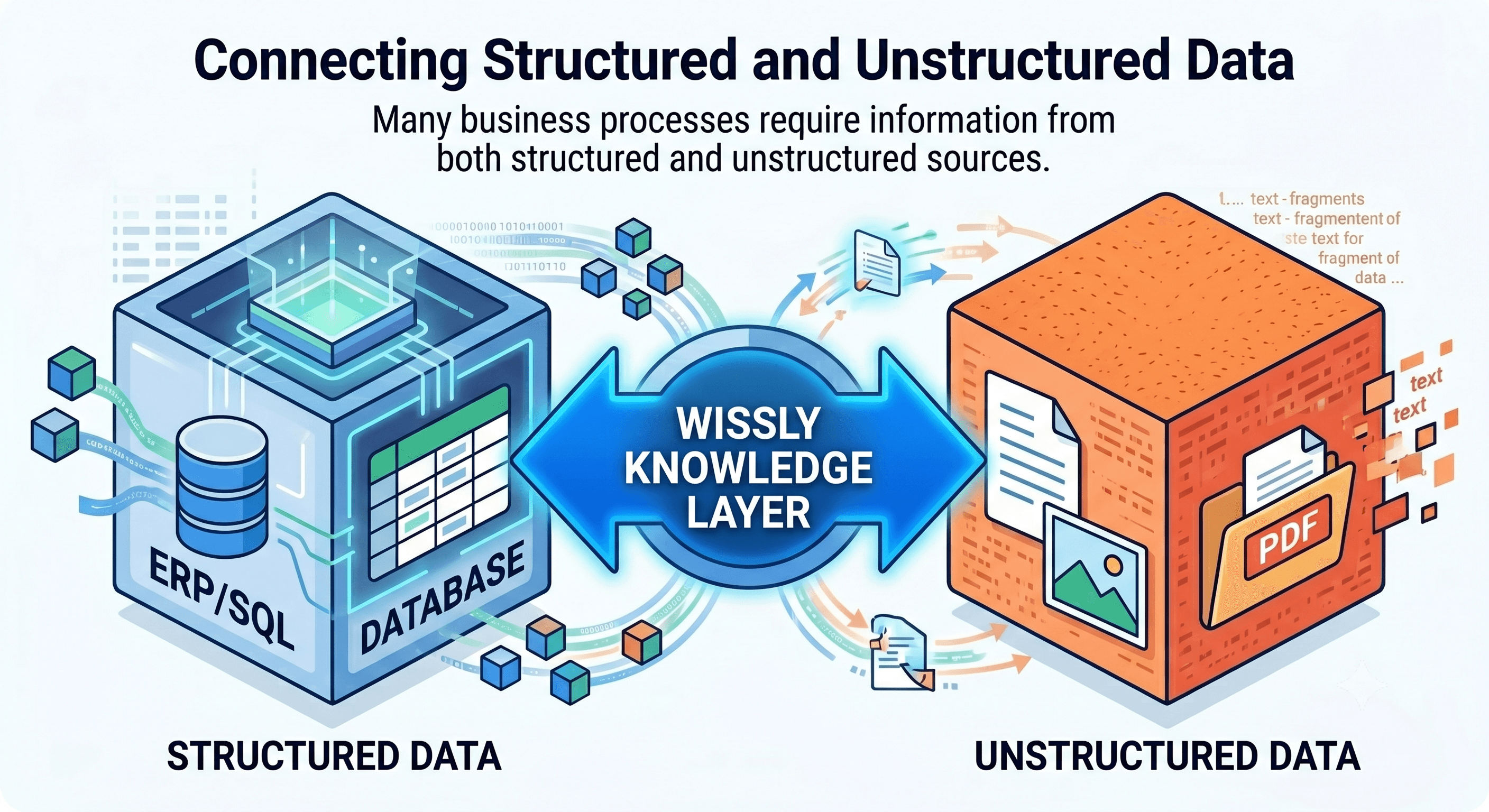
For example, finance teams often need to compare:
ERP billing records
Excel settlement sheets
PDF contracts
Internal approval documents
Traditionally, this process requires manual validation.
With AI-powered retrieval, users can ask:
"Compare this month's vendor invoices with contract terms and identify any rate discrepancies."
The system can automatically locate mismatches and provide links to the relevant source documents.
Why Source-Grounded Search Matters
For enterprise teams, an answer is only useful if it can be verified.
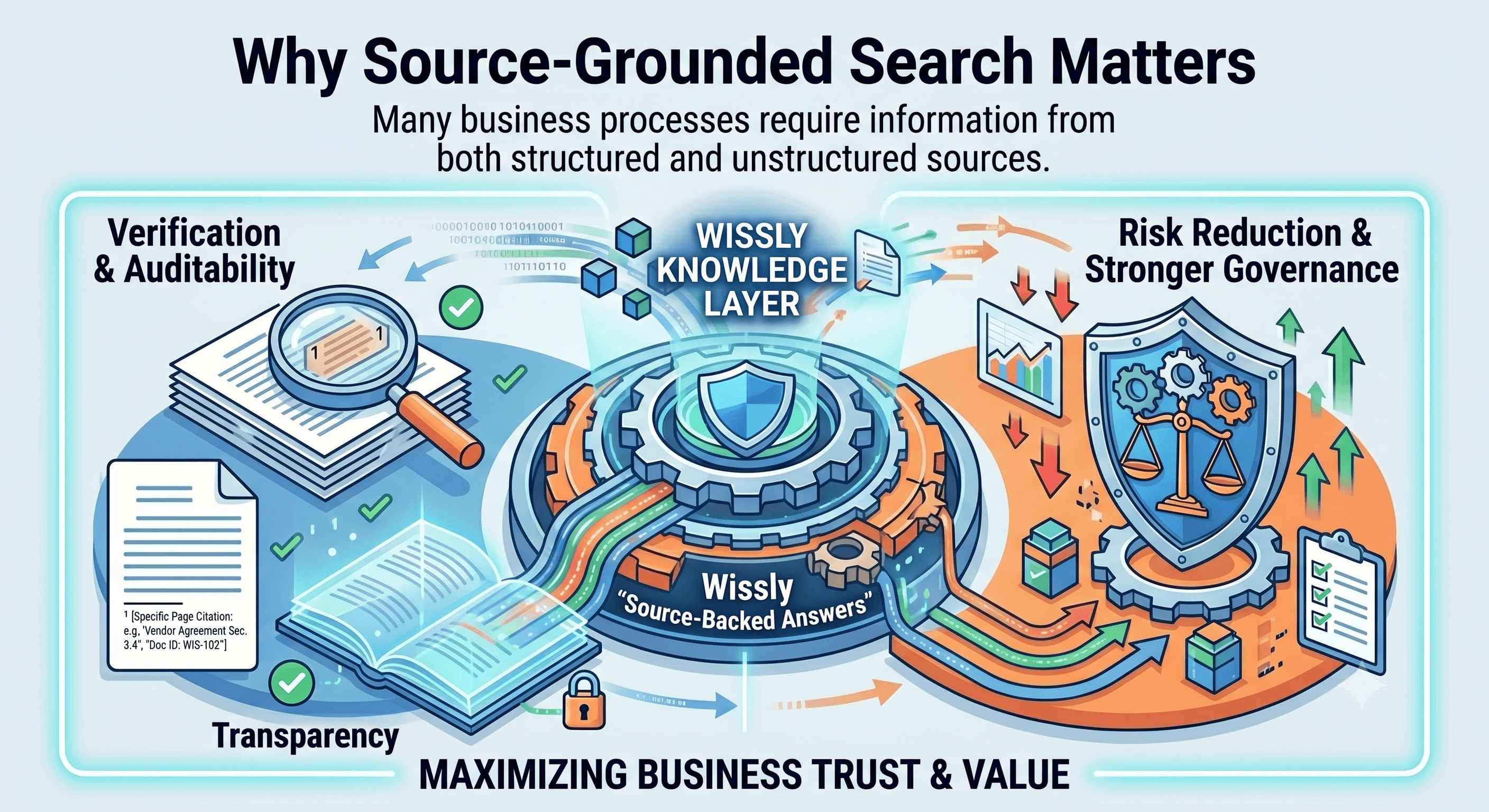
Unlike general-purpose AI tools, Wissly provides source-grounded responses that include:
Document references
Page numbers
Paragraph citations
Original file links
This allows employees to verify information before using it in reports, audits, or business decisions.
The result is greater transparency, stronger governance, and reduced risk.
How Wissly Improves Enterprise Knowledge Management
Wissly combines semantic search with Hybrid RAG technology to improve retrieval accuracy across enterprise systems.
By connecting ERP data, groupware platforms, internal wikis, and business documents into a single knowledge layer, employees can find information faster without relying on exact keywords or file locations.
Common use cases include:
Internal document search
Report generation
Contract validation
Compliance reviews
HR policy retrieval
Conclusion
The challenge facing most organizations is not creating more information. It is making existing information accessible.
AI-powered enterprise search helps teams find trusted information faster by understanding context, connecting fragmented systems, and providing source-backed answers.
With source-grounded retrieval and Hybrid RAG architecture, Wissly transforms scattered enterprise knowledge into a searchable and verifiable business asset.
📂 [Start Free Trial] Experience how Wissly retrieves your internal data in seconds.
🚀 [Request a Demo] See a live demo of Groupware & ERP integration for your organization.
💬 [Contact Consultant] Consult on Private AI deployment to secure your institutional knowledge.
Related Articles
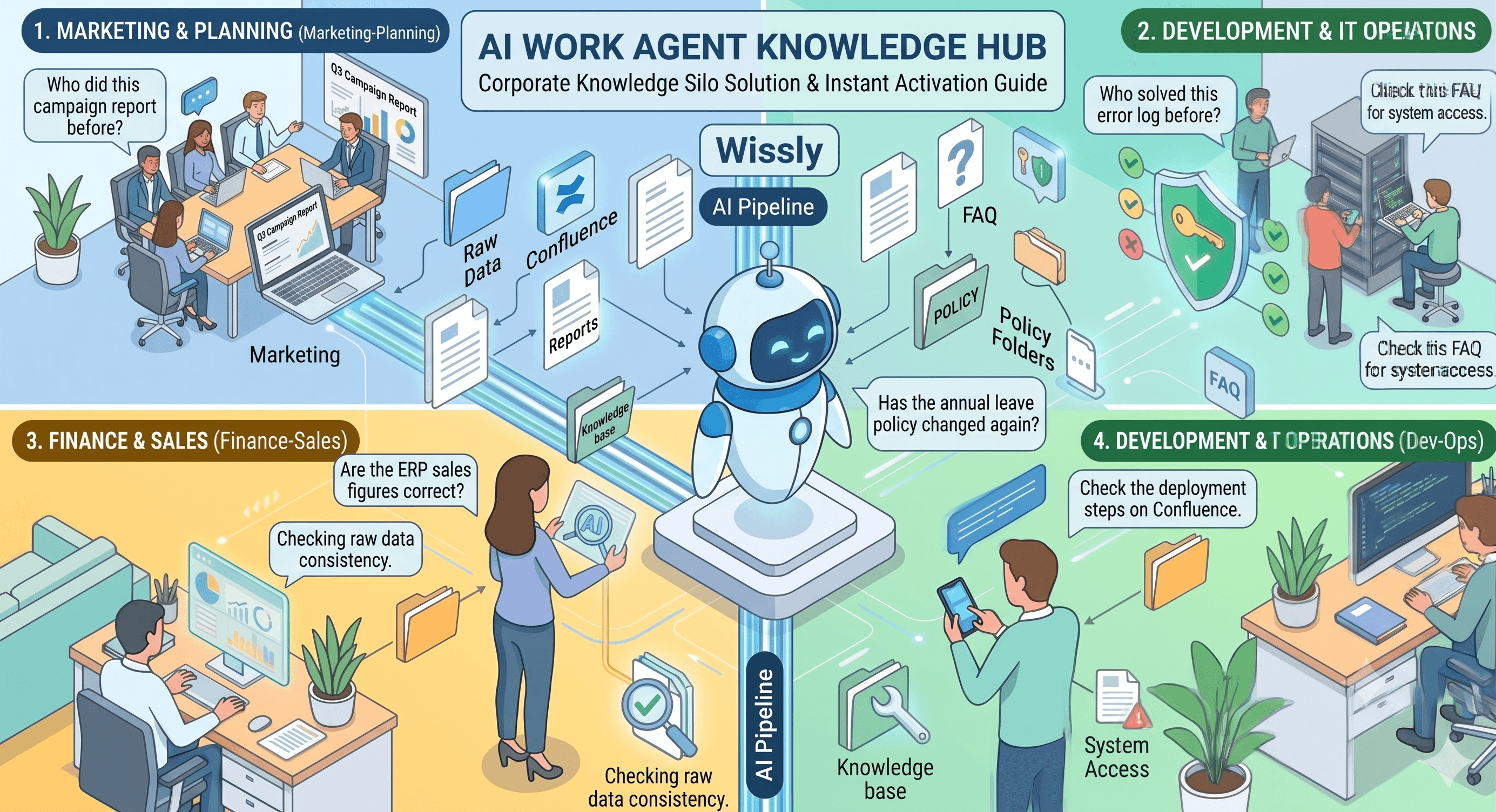
"Where Is Last Quarter's Campaign Report?"
"Did the PTO Policy Change Again?"
"Are These ERP Revenue Numbers Accurate?"
"Has Anyone Solved This Error Before?"
Recommended Content