
Insight
How Wissly Helps Engineering Teams Reduce MTTR - AI Incident Response

Production incidents rarely happen because teams lack data.
Most DevOps and SRE teams already have monitoring tools, alerts, logs, tickets, runbooks, and documentation. The real problem starts after the alert.
Engineers need to answer one question quickly:
“Have we seen this before, and how did we fix it?”
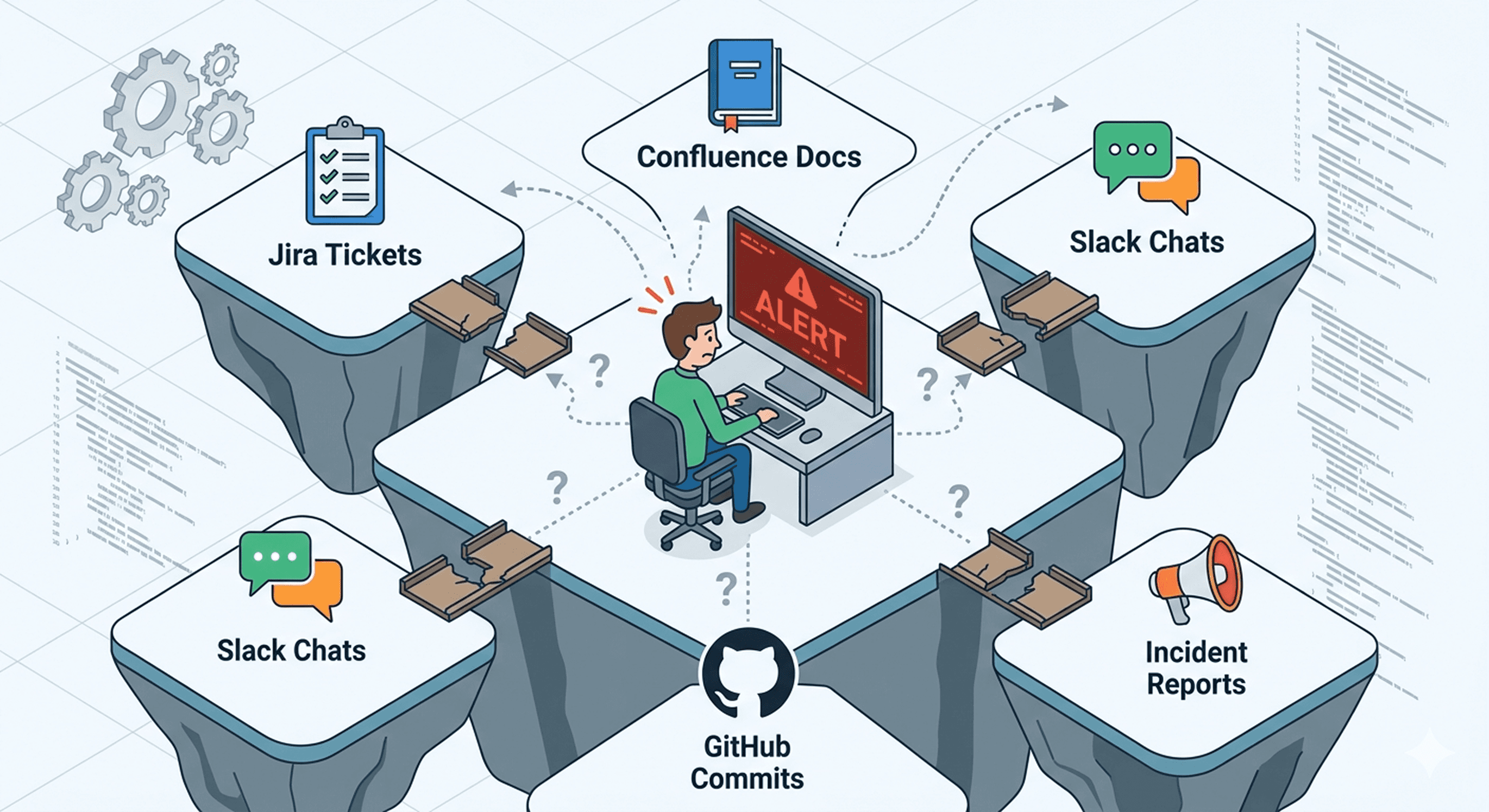
The answer often exists somewhere inside the company. But it is usually scattered across Jira tickets, Confluence pages, Slack conversations, Git commits, runbooks, and incident reports.
This is where AI Incident Response becomes useful.
What Is AI Incident Response?
AI Incident Response uses artificial intelligence to help engineering teams investigate and resolve production incidents faster.
It connects operational knowledge across internal tools and helps engineers find previous incidents, past fixes, relevant runbooks, and root cause analysis records.
Instead of searching each tool manually, engineers can ask questions like:
“Have we seen this database deadlock before?”
Or:
“Find similar incidents related to this authentication error.”
The goal is not just to search documents. The goal is to reconstruct how similar issues were solved before.
Why Incident Response Takes Too Long
Incident response is often slowed down by missing context.
Logs may show what is happening now, but they do not always explain:
whether the issue happened before
who fixed it last time
what patch was applied
which runbook was used
what the root cause was
whether the same fix is safe today
This context usually lives across multiple systems.
As a result, engineers spend time searching instead of resolving the incident. That increases MTTR, or Mean Time To Resolution.
What Is Operational Knowledge?
Operational knowledge is the information teams use to operate and troubleshoot production systems.
It includes incident history, RCA reports, runbooks, engineering decisions, Jira tickets, Slack discussions, Git commits, monitoring alerts, and internal documentation.
Many companies already have this knowledge. The problem is that it is fragmented.
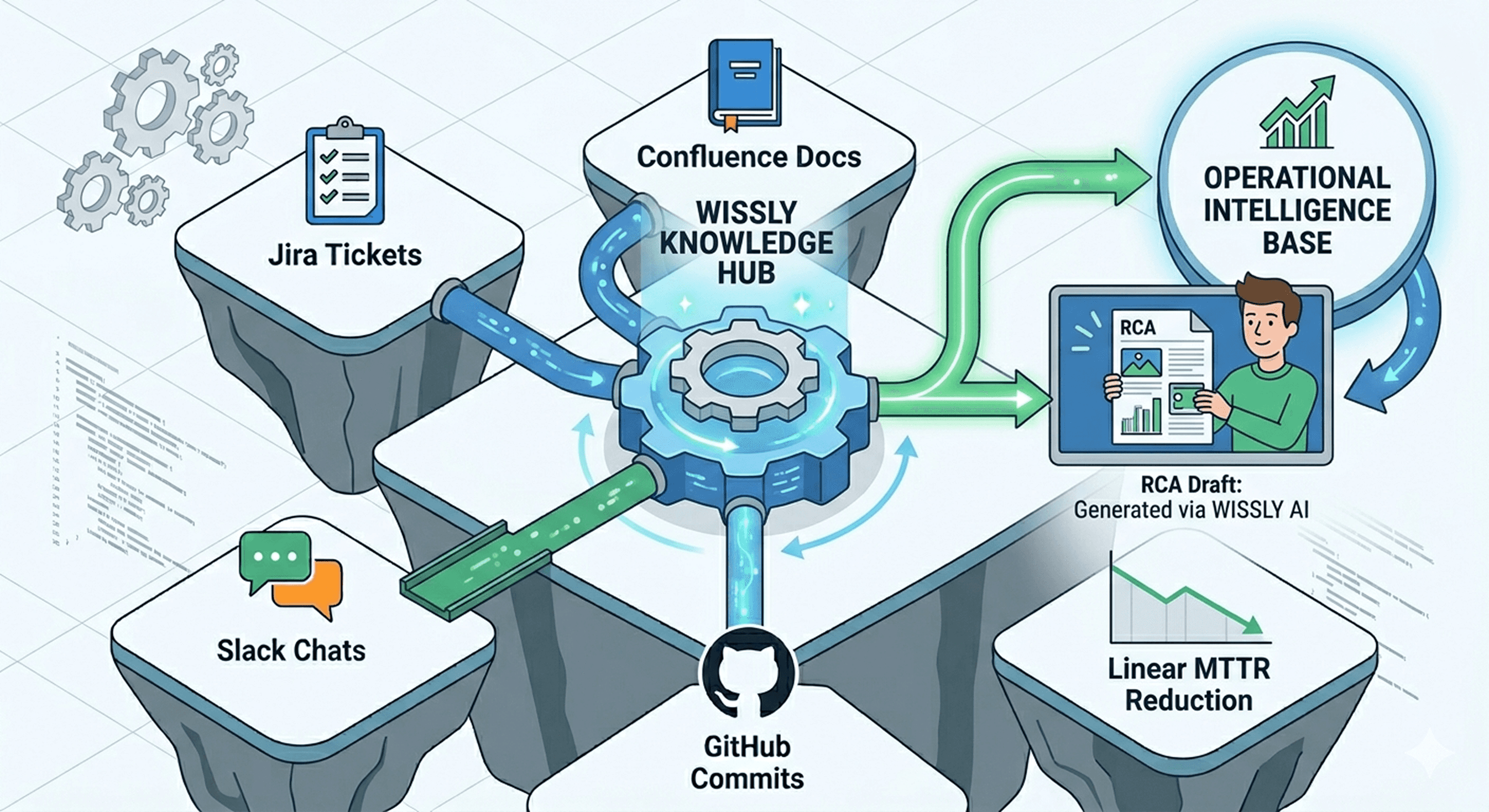
AI Incident Response helps turn fragmented operational knowledge into reusable engineering intelligence.
How AI Helps Reduce MTTR
AI helps reduce MTTR in three main ways.
First, it finds similar incidents. If the same type of latency spike or database issue happened before, AI can surface the past case and show how it was resolved.
Second, it recommends relevant runbooks. During an outage, engineers do not have time to browse documentation manually. AI can identify the right troubleshooting guide based on the current symptoms.
Third, it supports RCA creation. AI can connect logs, tickets, commits, and incident notes to help teams create a root cause analysis draft faster.
Enterprise Search vs AI Incident Response
Traditional enterprise search finds documents.
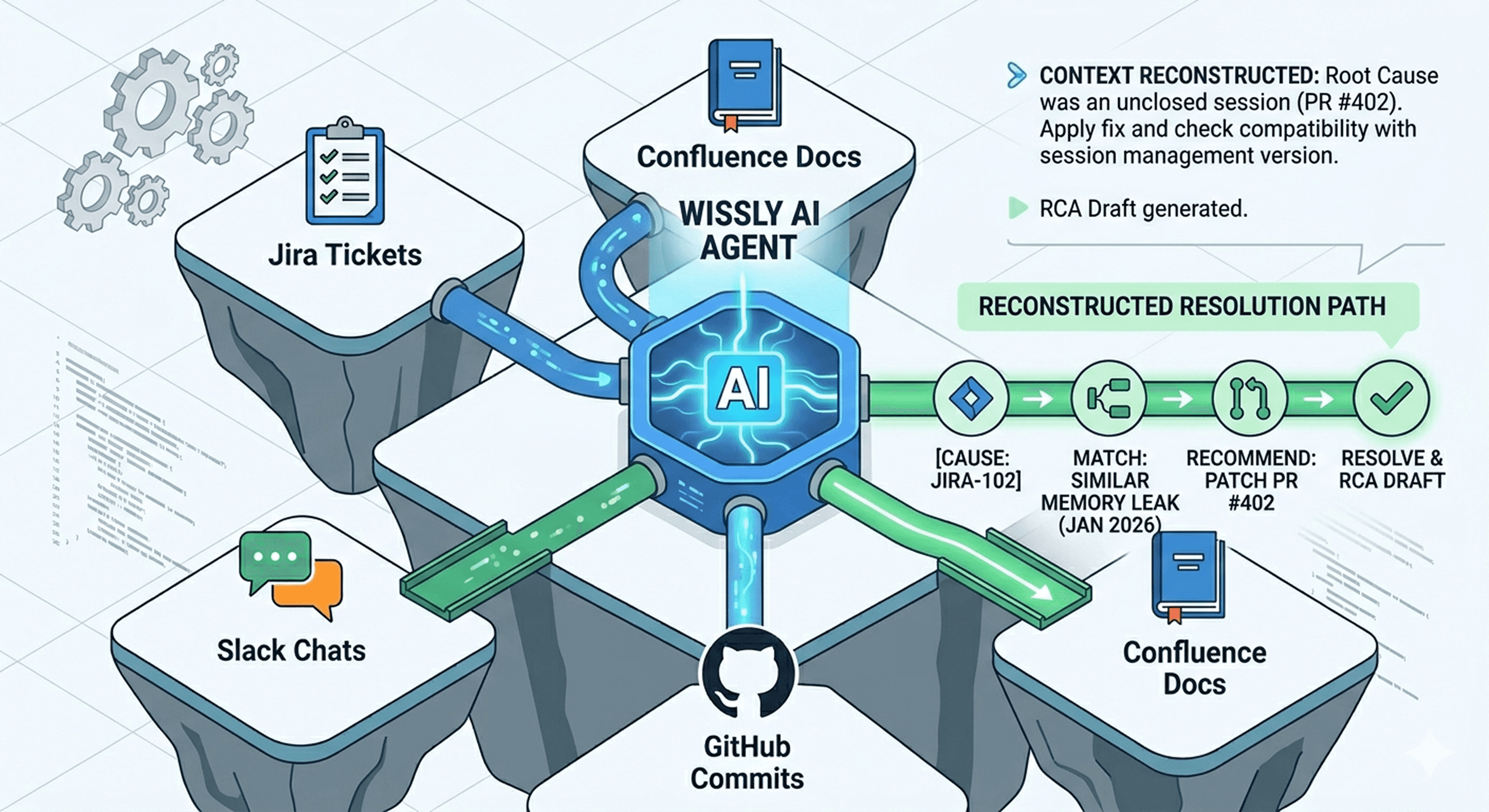
AI Incident Response connects documents, tickets, code changes, and incident history to explain what happened and what worked before.
For example, a search tool may return several Jira tickets and Confluence pages about a memory leak.
An AI incident response agent can summarize:
“This issue resembles a memory leak resolved in January 2026. The root cause was an unclosed session object introduced in a pull request. Before applying the same fix, check compatibility with the current session management version.”
This is the difference between finding documents and finding a resolution path.
Why Source-Based Answers Matter
In production environments, AI answers must be verifiable.
A confident but incorrect recommendation can create operational risk.
That is why source-backed answers matter. Engineers should be able to check the original Jira ticket, runbook, pull request, Git commit, or incident report before taking action.
For incident response, trustworthy AI is not just about generating answers. It is about showing evidence.
How Wissly Helps
Wissly is an enterprise AI agent for operational knowledge management and incident response.
It connects knowledge across Jira, Slack, Confluence, GitHub, internal documentation, runbooks, and incident reports.
With Wissly, engineering teams can:
find similar incidents
discover past fixes
retrieve relevant runbooks
connect tickets, commits, and documentation
generate RCA drafts
reduce MTTR
preserve operational knowledge
Wissly helps teams move from manual search to reusable incident intelligence.
When Should Teams Consider AI Incident Response?
AI Incident Response is useful when engineers repeatedly search multiple tools during incidents, RCA creation is too manual, knowledge is concentrated among senior engineers, or similar incidents happen again but previous fixes are hard to find.
In these cases, the issue is not a lack of information.
It is a lack of connected operational knowledge.
Conclusion
Fast incident response depends on more than logs and alerts.
It depends on how quickly teams can access the knowledge behind previous incidents.
AI Incident Response helps engineering teams connect scattered operational knowledge, reuse past fixes, reduce MTTR, and create better RCA reports.
For DevOps and SRE teams, the next step is not just better monitoring.
It is making operational knowledge easier to find, verify, and reuse.
FAQ
What is AI Incident Response?
AI Incident Response uses AI to help engineering teams investigate and resolve production incidents by connecting logs, tickets, runbooks, documentation, and historical incident records.
How does AI reduce MTTR?
AI reduces MTTR by finding similar incidents, surfacing relevant runbooks, retrieving past fixes, and helping teams understand previous resolution paths.
What is operational knowledge?
Operational knowledge is the incident history, documentation, tickets, runbooks, code changes, and engineering decisions that help teams operate production systems.
What is Wissly?
Wissly is an enterprise AI agent that connects operational knowledge across tools such as Jira, Slack, Confluence, GitHub, and internal documentation to help engineering teams reduce MTTR and automate RCA workflows.
Wissly Enterprise AI Transformation Guide
💬 Unify Fragmented Operational Knowledge
Connect operational knowledge scattered across Jira, Confluence, Git, Slack, and internal documentation.
📂 Request an IT Operations-Focused PoC
Validate MTTR reduction and RCA automation using your organization’s real incident history.
Related Articles
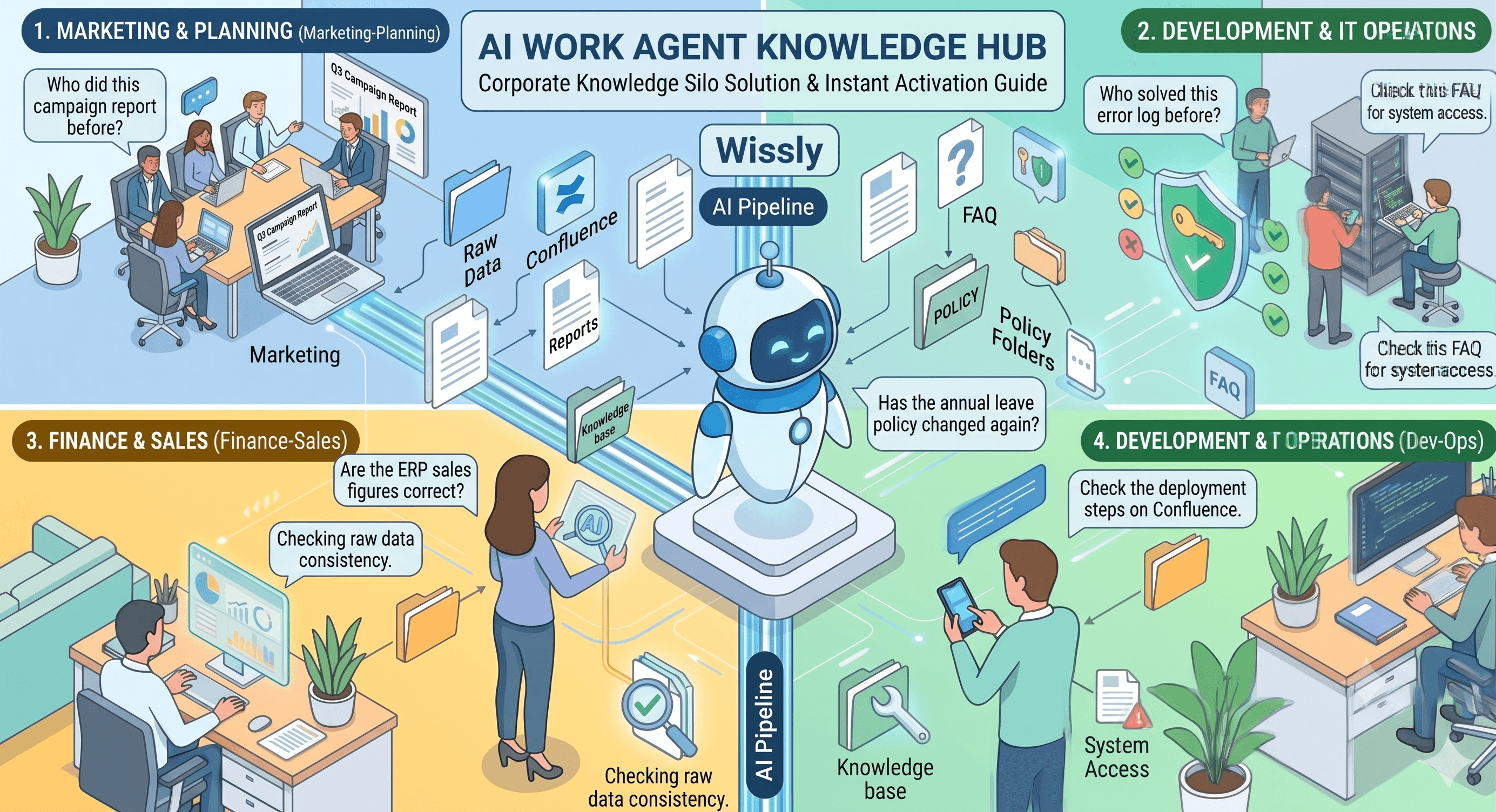
"Where Is Last Quarter's Campaign Report?"
"Did the PTO Policy Change Again?"
"Are These ERP Revenue Numbers Accurate?"
"Has Anyone Solved This Error Before?"
Recommended Content