
Designing RAG to Effectively Use Unstructured Documents
Stop wasting time digging through scattered unstructured documents. See how RAG design transforms them into searchable, reliable knowledge.

Modern organizations handle massive amounts of unstructured data every day. Emails, PDFs, scanned images, reports-documents come in many different formats and structures, making it difficult to quickly find the information you need.
One of the most effective technologies addressing this challenge is RAG (Retrieval-Augmented Generation).
RAG works by retrieving relevant information from internal company documents before a large language model (LLM) generates an answer. Instead of relying on vague inference, the model produces responses grounded in actual source documents. This significantly reduces hallucinations and enables clear, verifiable answers with traceable sources.
How RAG Unlocks the Value of Unstructured Documents
transforms documents of all kinds into usable enterprise knowledge assets. It automatically processes more than 10 document formats, including PDF, Word, Excel, PowerPoint, and HWP (Hangul), and unifies them into a single, searchable knowledge base.
This is made possible through the following RAG preprocessing strategies.
Key 1) Semantic Chunking: Splitting Documents by Meaning, Not Length
Using entire documents in RAG preserves context, but often results in lower retrieval accuracy and higher costs. On the other hand, splitting documents into overly small chunks makes retrieval easier but risks losing critical context needed to generate accurate answers.
Wissly addresses this trade-off by chunking documents based on semantic boundaries rather than character count.
Examples include:
-
Transitions between paragraphs or sections
-
The flow from explanation to conclusion
-
Contextual boundaries before and after tables or images
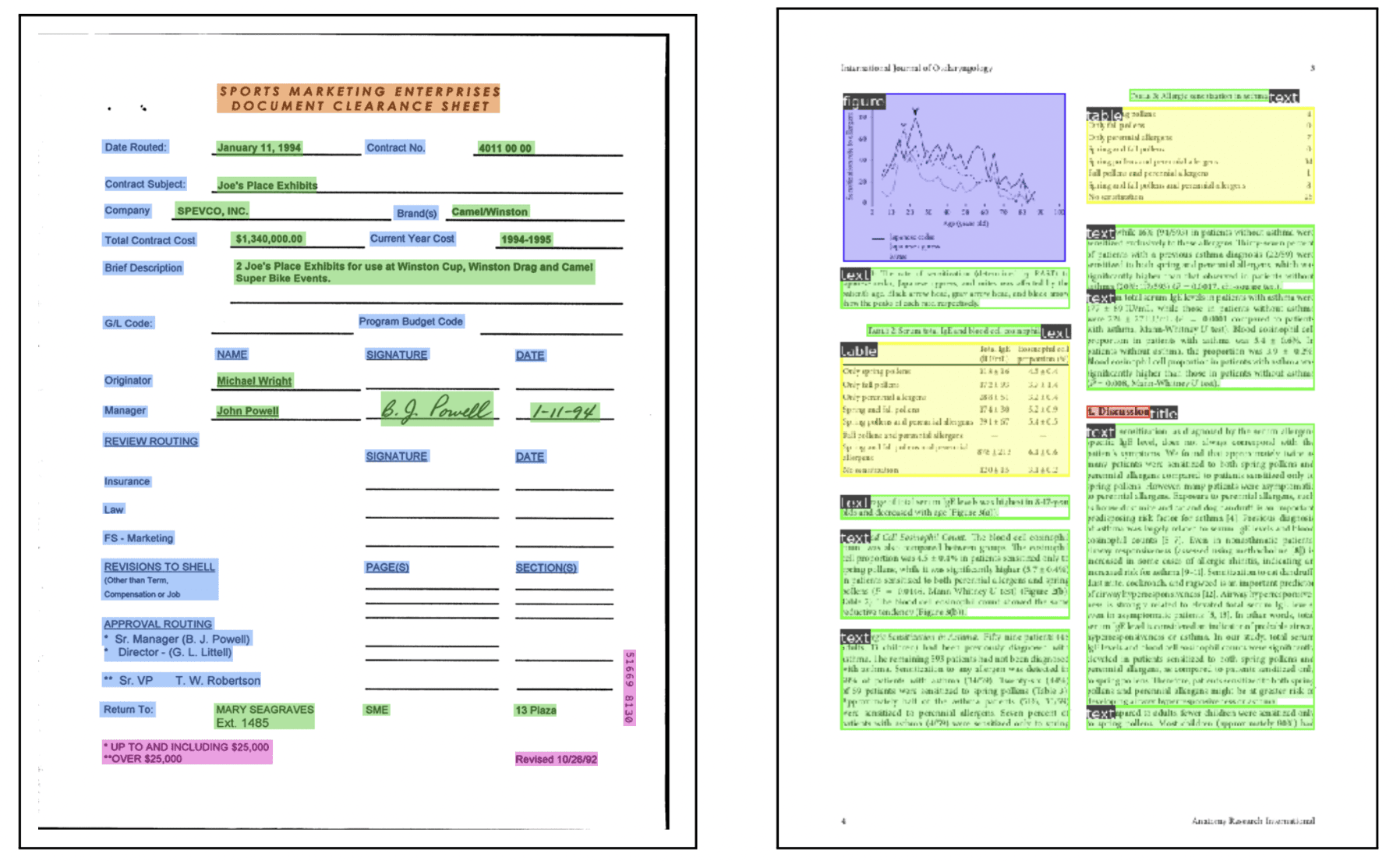
Because the optimal unit of meaning varies by document type, Wissly applies format-specific chunking strategies. For instance, PDFs often benefit from denser chunking, while PPTs or Excel files are more naturally segmented by slides, sheets, or tables.
Key 2) Extracting Hidden Text with OCR
Many enterprise documents contain information that is not directly machine-readable-such as scanned images, embedded tables, or charts. Traditional text-based search or RAG systems often miss this data entirely.
Wissly uses an OCR (Optical Character Recognition)-based, multi-format processing pipeline to extract text embedded within images. This allows numerical values in scanned tables or chart captions in reports to be used for retrieval and answer generation.
Crucially, OCR is applied selectively, not indiscriminately. Only regions identified as images are processed with OCR, ensuring both performance and cost efficiency. As a result, previously hidden information becomes fully searchable within the RAG system.
Key 3) Page Anchoring: Linking Answers Back to the Source
One of the most common questions users ask when interacting with AI is:
“Where did this information come from?”
To address this, Wissly implements page anchoring, which precisely links each chunk back to its original location in the source document.
Each chunk is stored with rich metadata, such as the document name, page number, and section title. This allows users not only to read the AI’s response, but also to immediately see where the information appears in the original document. With a single click, they can jump directly to the source page.
This approach goes beyond simply displaying citations-it turns AI-generated answers into verifiable, trustworthy information. Users don’t have to blindly trust the AI and can always review the original content when needed.
The Value of Turning Unstructured Documents into Searchable Knowledge
With a well-designed RAG pipeline, even unstructured documents can become knowledge assets that deliver precise answers on demand. Compared to manually searching through files, this approach enables faster, more accurate decision-making and dramatically reduces the time employees spend looking for information.
Semantic chunking, OCR-based multimodal processing, and metadata-driven page anchoring are the core components that transform neglected unstructured documents into practical AI-powered knowledge assets.
RAG is no longer just a technical trend-it has become one of the most practical and effective ways for organizations to truly leverage their documents.