
AI Strategy Reporting: Turning Corporate Assets into Logical Strategic Reports
Skilled report writers excel at precise organization, not speed. This guide distinguishes and combines AI tools for strategy reports, document summarization, automated reporting, and academic analysis. Learn how top performers leverage them for impact.

The real skill lies in extracting insights from data oceans, building purpose-driven frameworks, and repackaging insights for different stakeholders. This guide separates strategic report-writing AI, automated report generators, document summarizers, and academic analysis tools-and shows how to combine them effectively in real-world workflows.
1-1 Too much raw material, too little structured insight.
Market reports, competitor IR materials, customer interviews, contracts, internal experiments, academic papers-the volume overwhelms. The real bottleneck isn't reading but transforming raw data into decision-ready messages. Teams spend more time organizing than analyzing.
1-2 Writing takes less time than thinking clearly.
Report quality hinges on logic design, not prose polish. Without pre-defined audiences, decision items, and narrative flow (Problem → Analysis → Options → Conclusion), drafts grow longer but messages blur. Even AI-generated content fails when the underlying structure lacks clarity-producing verbose but directionless outputs.
2-1 Document summarizers vs. report builders.
Document summarizers excel at rapidly scanning massive volumes to extract key facts and sentences. They're unbeatable for lossless compression of raw information.
Report-writing AI designs message-first documents around purpose, audience, and logical flow. The same data gets different emphasis based on decision needs.
2-2 Automated report generators vs. end-to-end platforms.
Report generators fill standardized templates (table of contents, tone, charts) with data for recurring reports like weekly briefs or competitor updates.
End-to-end platforms automate data aggregation, standardization, version control, and source linking-stabilizing entire report workflows including collaboration and approvals.
2-3 Academic analysis tools shine in evidence chains.
They extract research questions, methods, data, limitations from papers, enabling reproducible comparisons. Citation tracking, code/dataset linking, and reference management build credible research-backed reports.
3-1 Structure first, summarization second.
They start with problem definition, key questions, and decision items. Document summarizers then create evidence cards (key sentences + source links). Report builders map these cards to outline → argument → evidence structures. Pre-built frameworks guarantee consistent draft quality.
3-2 AI excels at comparison frameworks, not first drafts.
The real leverage comes from standardizing competitors, markets, or deals into identical schemas. Fix common dimensions (pricing, product scope, customer segments, distribution channels) across companies A/B/C, and differences emerge naturally as compelling narratives.
3-3 Clear role division: Humans hypothesize, AI documents.
AI handles evidence gathering, alignment, and summarization. Humans set hypotheses, establish priorities, and make judgments. Conclusions stay human-written; AI auto-generates supporting charts, tables, and linked appendices.
4-1 Strategic Planning Reports
-
Raw material processing: Document summarizers collect external reports, news, IR materials, regulations → auto-categorize by theme (Market/Technology/Competition/Regulation).
-
Narrative construction: Report AI generates "What/Why/So-What" impact statements and scenario options. Stakeholder summaries separate executive vs. operational views.
4-2 Market/Competitor/Deal Research
-
Standardized comparisons: Align target companies' KPIs, pricing, roadmaps into identical templates for true "apples-to-apples" analysis.
-
Issue prioritization: Convert contracts, news, and reports into summary cards. Surface Top-N risks, strengths, and issues first.
4-3 Academic Research Reports
-
Paper standardization: Analysis tools extract research questions → methods → data → results → limitations into uniform formats.
-
Report scaffolding: Report AI builds Intro → Literature → Methods → Results → Implications outlines with auto-inserted citations and dataset links.
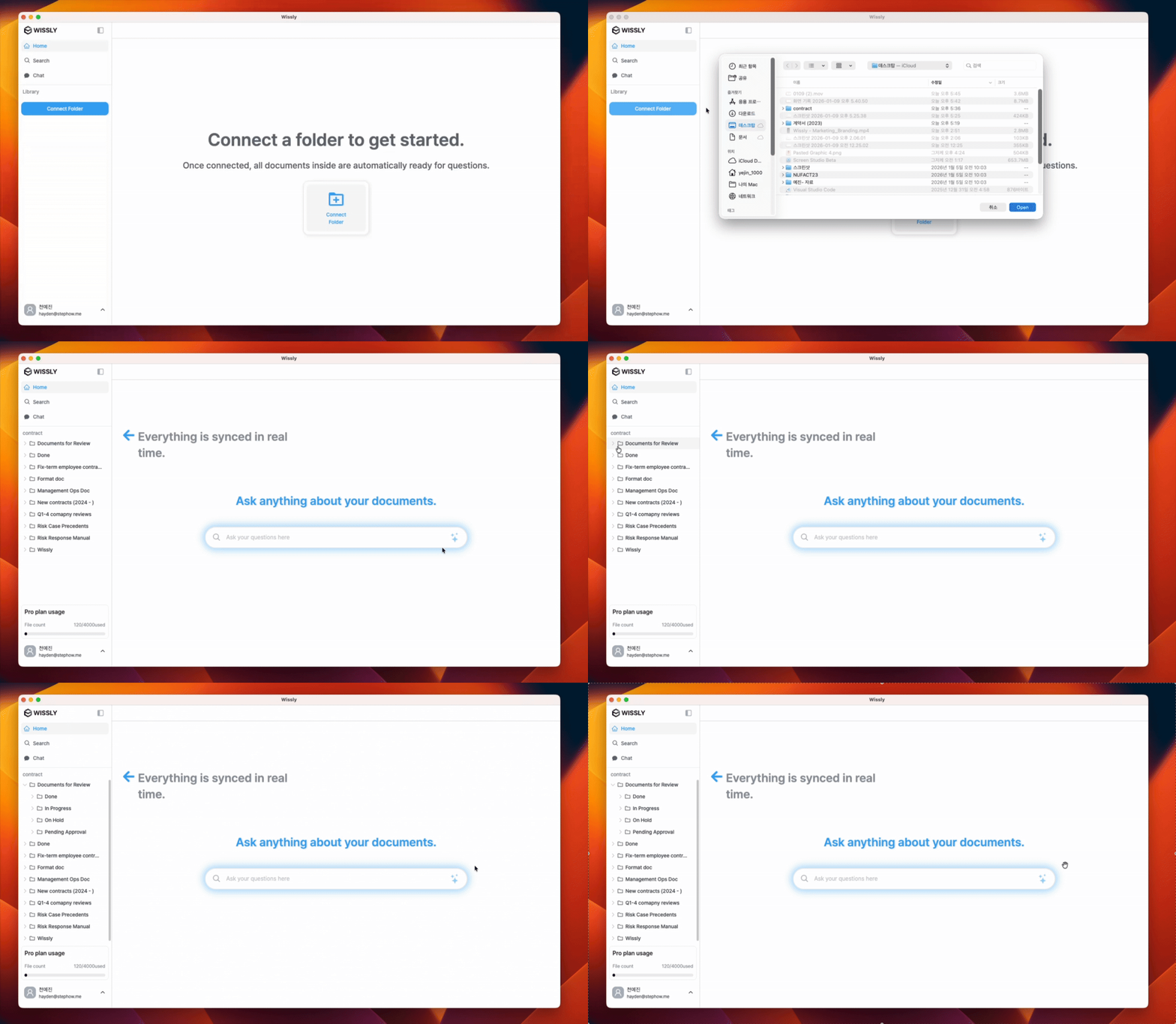
5-1 Unified document parsing and card-based organization.
Wissly parses PDFs, slides, web pages, and scans-decomposing paragraphs, tables, and image captions into semantic units. Each unit gets categorized, summarized into cards, and flagged for duplication, contradiction, or missing evidence.
5-2 Outline-driven report assembly.
Input target audience and decision items → Wissly generates scaffolded outlines (section structure + key messages per section). Drag selected evidence cards onto the outline → arguments, evidence, and sources auto-align.
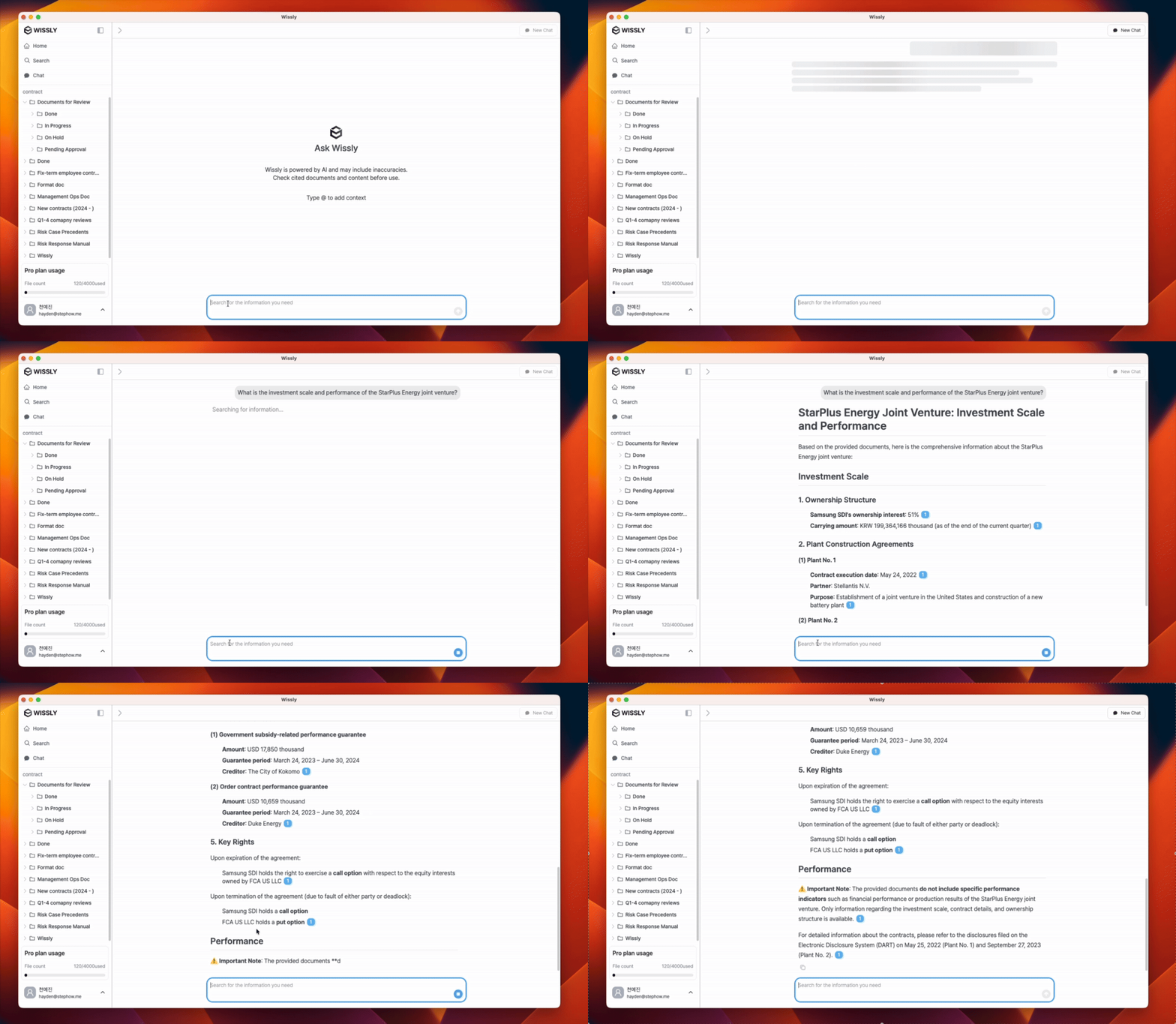
Clean reports with traceable appendices.
Main document keeps only impact statements and visuals. Evidence, full quotes, and datasets live in organized appendices/card packs. Version history, change tracking, and review comments maintain collaboration quality.
6-1. Competitor/market research → draft report
Convert 50-4000 documents into categorized cards → rearrange by audience needs → auto-generate draft. Monthly updates highlight only changed sentences.
6-2. Multi-paper research synthesis
Auto-extract research questions/methods/data/limitations into comparison tables → assess result robustness and generalizability → structured commentary.
6-3. Executive brief/one-pager automation
Auto-generate 5 impact statements + 3 KPI cards + 3 risk/next-step cards → deploy pre-meeting briefing package.
Success = faster writing? No. Success = clearer structure.
Report value comes from decision quality, not word count. AI owns information organization, standardization, and traceability. Humans own hypotheses, prioritization, and judgment calls.
Wissly's 3-Step Transformation Path
-
Pick 3 recurring report types
-
Establish source-linking standards
-
Automate monthly updates
Wissly delivers on-premises/hybrid security, universal document parsing, and card/outline/appendix workflows-driving measurable improvements from day one.