
AI for Document-Heavy Workflows: Solving Knowledge Loss in Public Sector Teams
Stop losing institutional knowledge during role rotations. Discover how Wissly analyzes 5,000+ documents securely to maintain administrative continuity and boost efficiency.

On Your First Day After a Role Rotation, You Face a 2,000-Page Manual
On your first day after a role rotation, you sit down at your new desk and face a 2,000-page manual.
Thousands of files. Cabinets full of documents. No clear starting point.
“The previous staff member has already moved to another department. A citizen is asking about a regulation right now, and I don’t even know where to begin.”
This is not an edge case. It is a structural problem.
In many public sector organizations, frequent role rotations create a hidden cost: knowledge fragmentation. Every time a staff member changes, context disappears. Documentation exists, but understanding does not.
This is why AI for document-heavy workflows is no longer optional. It is becoming essential for maintaining continuity, accuracy, and decision-making speed.
Role Rotation Creates Organizational Knowledge Loss
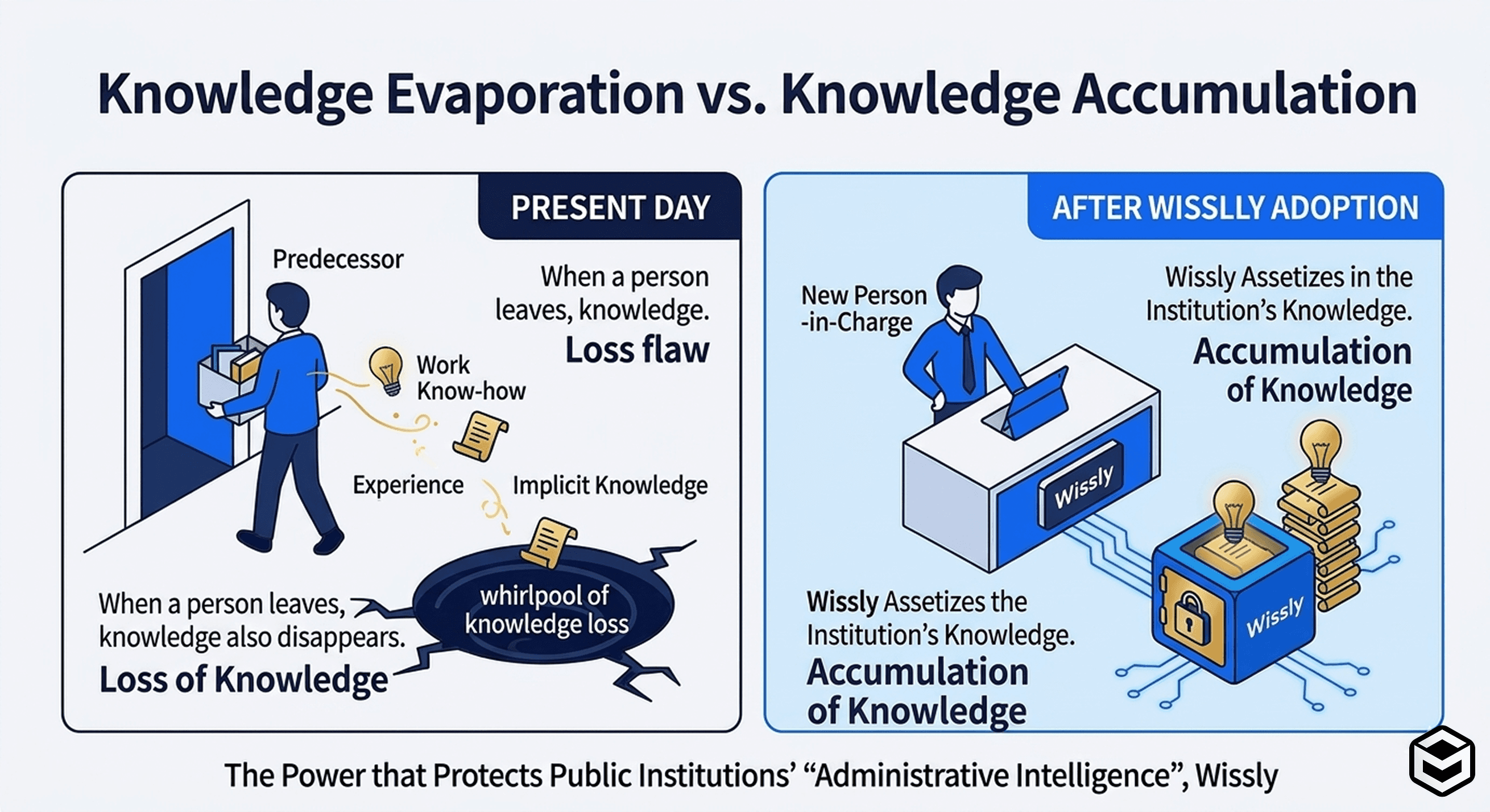
Role rotation increases operational flexibility, but it also creates a serious side effect: institutional knowledge gets fragmented.
When responsibilities move from one person to another, experience and judgment often do not transfer with enough clarity. New staff members are left to interpret policies, guidelines, and past documents from scratch.
This is more than an inconvenience. It slows down public service, increases uncertainty, and weakens decision-making across the organization.
2-1. Knowledge Loss Across Role Transitions
Even when documents are preserved, decision logic and context are often not. New employees must reinterpret policies from the ground up, which slows down operations and increases risk.
2-2. Security Constraints on AI Usage
Public institutions cannot freely use external AI tools with sensitive information. Policy drafts, citizen data, internal reports, and administrative records cannot be exposed to external systems.
This makes secure AI deployment a critical requirement.
2-3. Organizational Silos
Teams often duplicate work simply because they cannot access or discover existing knowledge.
The result is repeated policy reviews, redundant reporting, and wasted time across departments.
Not all AI tools are built for document-heavy environments.
For public sector and enterprise use, the requirements are very different from general-purpose AI tools.
Secure Deployment Options
Look for solutions that support on-premise or private cloud deployment, so sensitive data remains under full organizational control.
Large-Scale Document Processing
The system should be able to handle thousands of documents simultaneously, not just short prompts or a few uploaded files.
Evidence-Based Answers
AI should not simply generate responses. It should provide traceable sources, such as policy clauses, document sections, and page references.
Data Ownership and Control
Your organization’s data should remain fully isolated and should not be reused for external model training.
Support for Unstructured Data
PDFs, scanned documents, tables, and images should be processed accurately. OCR capability is essential in document-heavy environments.
When evaluating AI for public sector workflows, it helps to compare three categories: general AI tools, traditional knowledge management systems, and purpose-built document AI platforms.
<table><tbody><tr><td><p dir="ltr"><strong>Feature</strong></p></td><td><p dir="ltr"><strong>Generative AI (e.g. ChatGPT)</strong></p></td><td><p dir="ltr"><strong>Traditional KMS</strong></p></td><td><p dir="ltr"></p></td></tr><tr><td><p dir="ltr">Security</p></td><td><p dir="ltr">External environment</p></td><td><p dir="ltr">Internal-only environment</p></td><td><p dir="ltr">On-premise / Private cloud</p></td></tr><tr><td><p dir="ltr">Document Handling</p></td><td><p dir="ltr">Limited input size</p></td><td><p dir="ltr">Keyword-based search</p></td><td><p dir="ltr">5,000+ documents analyzed together</p></td></tr><tr><td><p dir="ltr">Answer Reliability</p></td><td><p dir="ltr">May lack grounding</p></td><td><p dir="ltr">Document links only</p></td><td><p dir="ltr">Source-based answers with references</p></td></tr><tr><td><p dir="ltr">Data Control</p></td><td><p dir="ltr">Platform-dependent</p></td><td><p dir="ltr">Storage-focused</p></td><td><p dir="ltr">Fully isolated environment</p></td></tr><tr><td><p dir="ltr">Unstructured Data</p></td><td><p dir="ltr">Limited support</p></td><td><p dir="ltr">Weak support</p></td><td><p dir="ltr">Strong OCR-based processing</p></td></tr></tbody></table>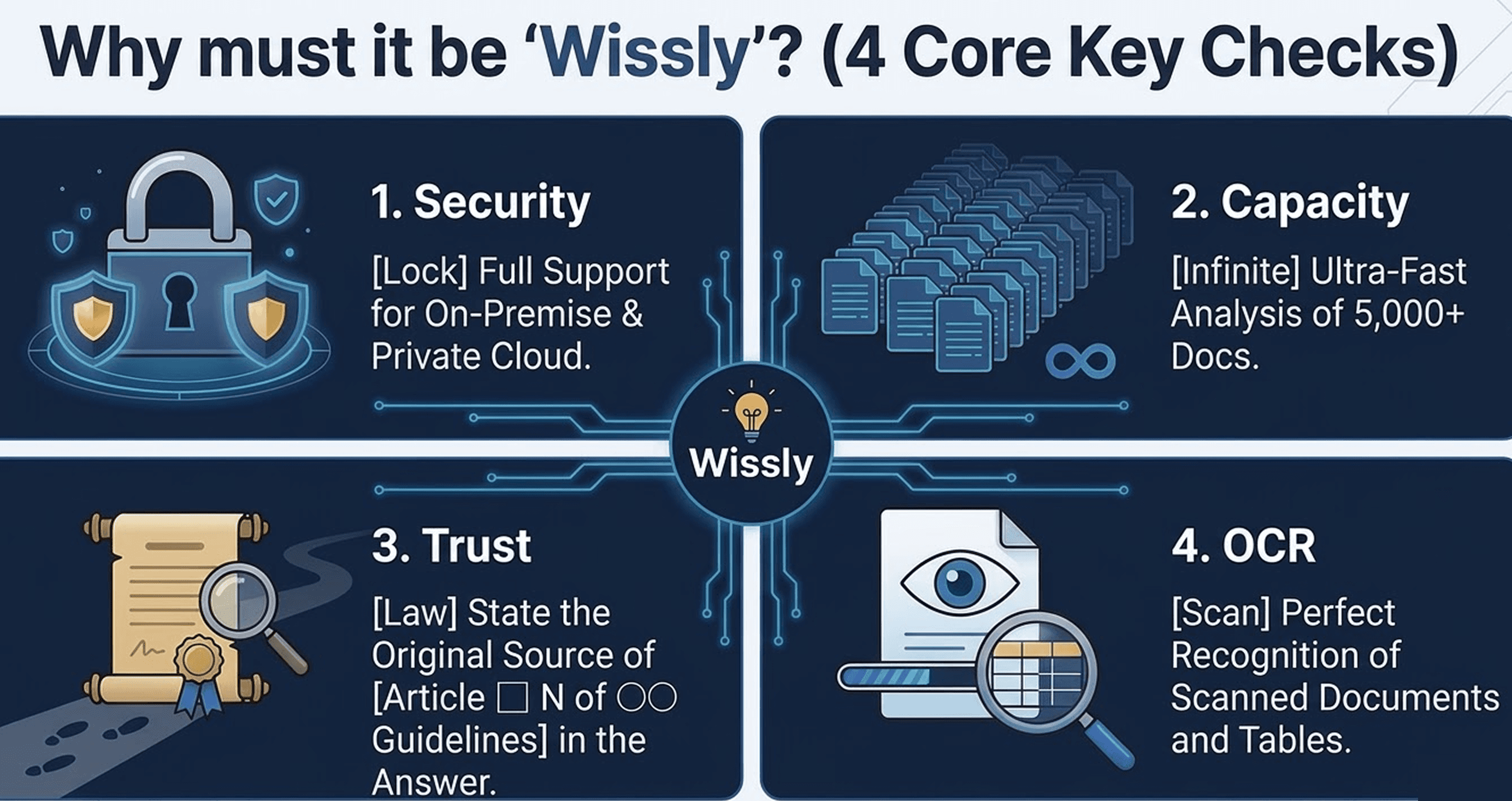
Wissly is designed for AI-powered document search and internal knowledge workflows.
Analyze Thousands of Documents at Once
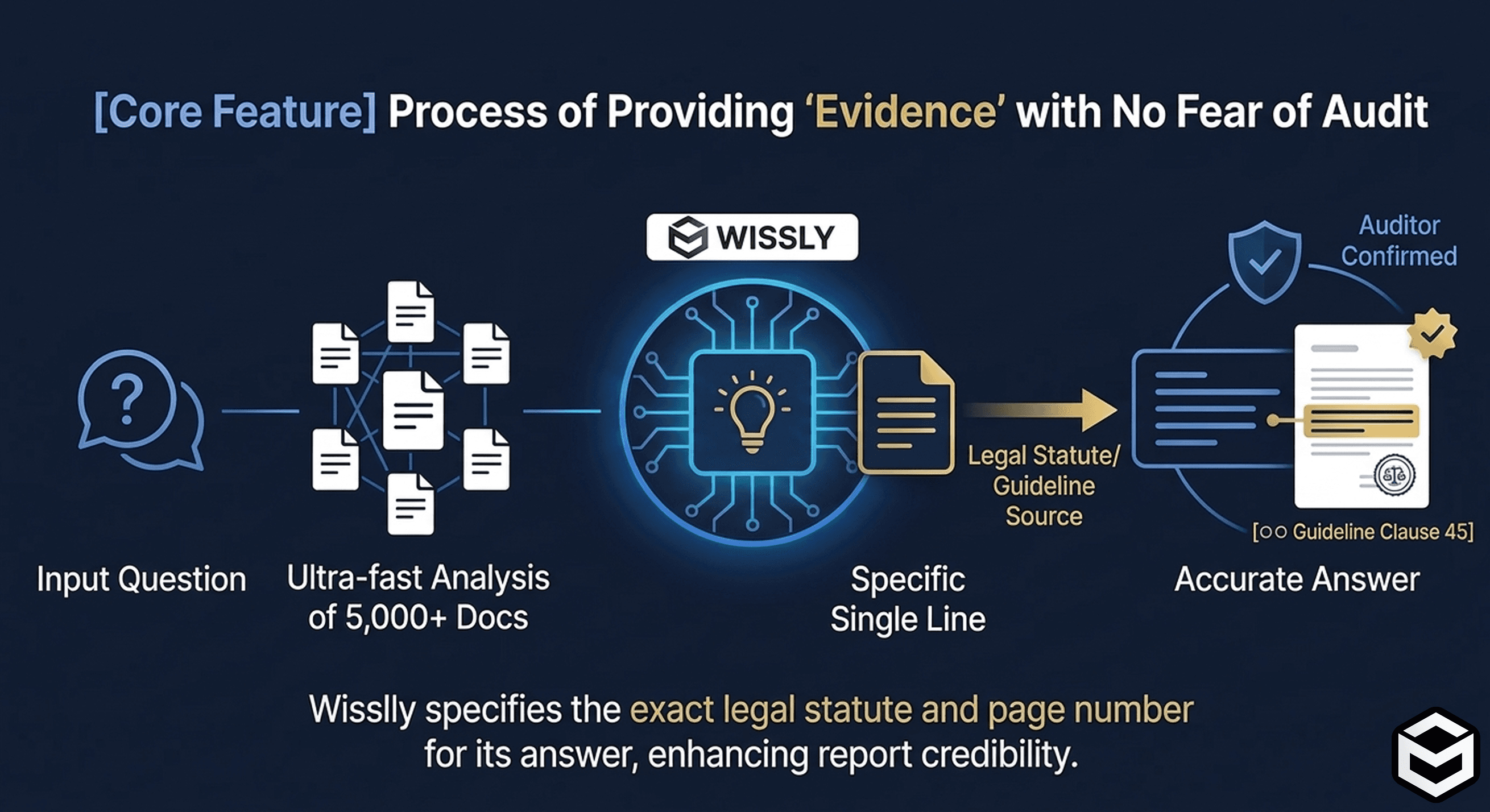
Instead of searching file by file, Wissly processes thousands of documents together and identifies connections across policies, reports, manuals, and historical records.
This helps teams move beyond keyword matching and toward context-aware knowledge retrieval.
Built for Secure Environments
With support for on-premise and private cloud deployment, Wissly aligns with strict security and compliance requirements.
This makes it more suitable for organizations that cannot risk exposing sensitive information to external AI systems.
Answers You Can Trust
Every response is backed by verifiable sources, including exact clauses, sections, and document locations.
That makes the output more useful for reporting, internal review, and audit preparation.
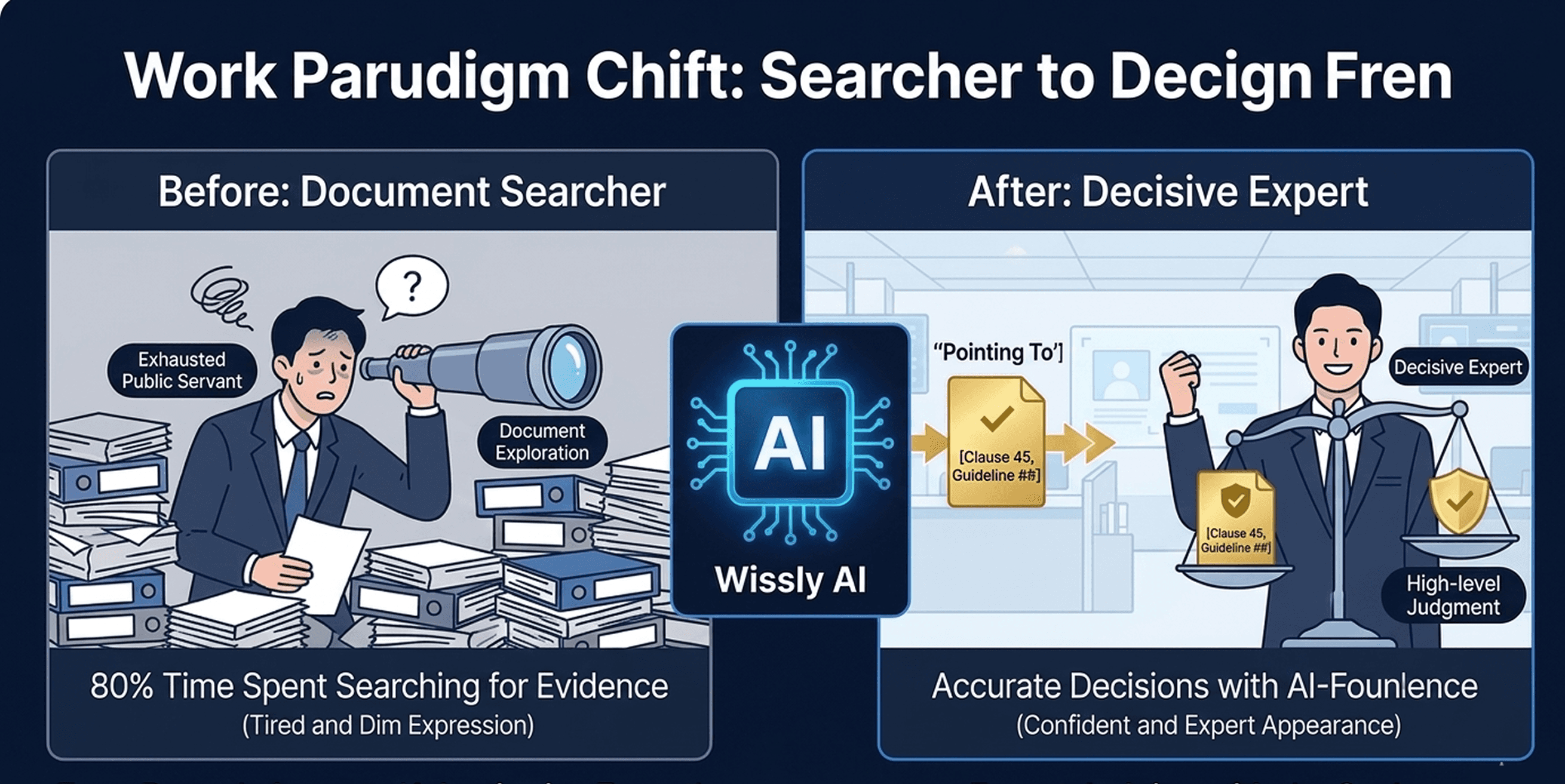
The real shift is not about replacing people.
It is about changing how work happens.
Instead of spending hours searching for the right document, staff can focus on interpreting, validating, and making decisions based on reliable information.
This changes workflows in meaningful ways:
-
From searching documents to understanding context
-
From re-reading policies to applying knowledge
-
From individual memory to shared intelligence
Finding Past Policy Responses
“Can you find how we handled a similar case last year?”
Instead of searching manually across folders and archives, AI can analyze large volumes of records and surface relevant precedents quickly.
Writing Reports Faster
Teams can draft reports based on existing policies, prior documents, and validated source material.
This reduces time spent gathering evidence and improves consistency.
Cross-Department Knowledge Sharing
Previously siloed knowledge becomes searchable and reusable across teams.
That helps prevent duplicate work and improves institutional continuity.
-
Q1. What is AI for document-heavy workflows?
-
A1. It refers to AI systems that can analyze, search, and interpret large volumes of internal documents such as policies, reports, manuals, and records in order to support decision-making.
-
Q2. Is it safe to use AI with sensitive documents?
-
A2. Yes, if the system is deployed in a secure environment such as on-premise or private cloud, where the organization maintains full control over data access and processing.
-
Q3. What types of organizations benefit most from this approach?
-
A3. This approach is especially useful for organizations with large volumes of internal documents, frequent staff transitions, strict security requirements, and complex reporting or compliance workflows.
In document-heavy organizations, the biggest bottleneck is not a lack of data.
It is the inability to use existing knowledge effectively.
AI changes that not by creating entirely new information, but by making existing knowledge accessible, connected, and actionable.
That is what turns document archives into operational intelligence.
If your organization is struggling with too many documents, knowledge loss from role changes, slow document search, or security concerns around AI, it may be time to explore a more practical approach.
Try Wissly with your own documents and see how secure AI-powered knowledge retrieval can improve continuity, speed, and confidence across your workflows.
👉 Try Wissly with Your Own Documents
👉 Download Real Use Cases from Public Sector Teams