
Insight
Where Should Shipping Companies Begin with Maritime AI?

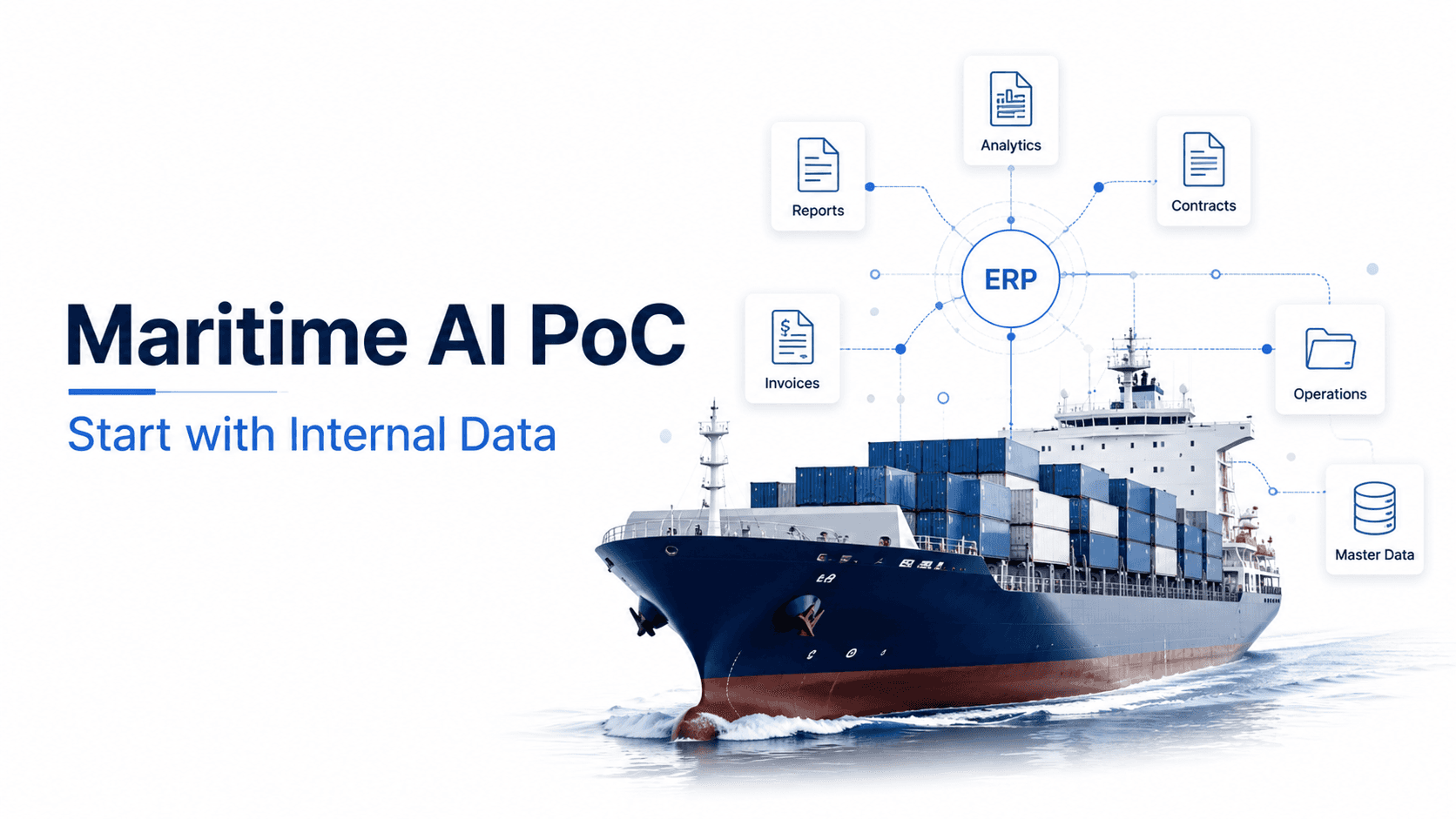
Maritime AI does not need to begin with new sensors, large platforms, or a full ERP replacement.
For most shipping companies, the best starting point is the data they already have: ERP records, Noon Reports, PMS logs, technical manuals, regulatory documents, emails, and shared-drive files.
A practical AI PoC should focus on workflows where teams already spend significant time searching, comparing, verifying, and preparing reports.
[Schedule a Maritime AI PoC Consultation →]
[Request a Free Technical Infrastructure Assessment →]
Executive Summary
Shipping companies should begin AI adoption with existing enterprise data, not major infrastructure replacement.
The most practical first use cases are:
Decarbonization and environmental compliance reporting
Noon Report verification and document workflow automation
Technical maintenance knowledge retrieval using PMS logs and manuals
These workflows are frequent, data-heavy, and easy to evaluate during a scoped PoC.
Why Should Maritime AI Start with Existing Data?
Many maritime AI projects fail to gain traction because they start too broadly.
New IoT sensors, predictive analytics platforms, and ERP modernization projects can be valuable, but they often require significant time, cost, and operational change.
A lower-risk starting point is to connect existing internal data and test whether AI can reduce specific workflow bottlenecks.
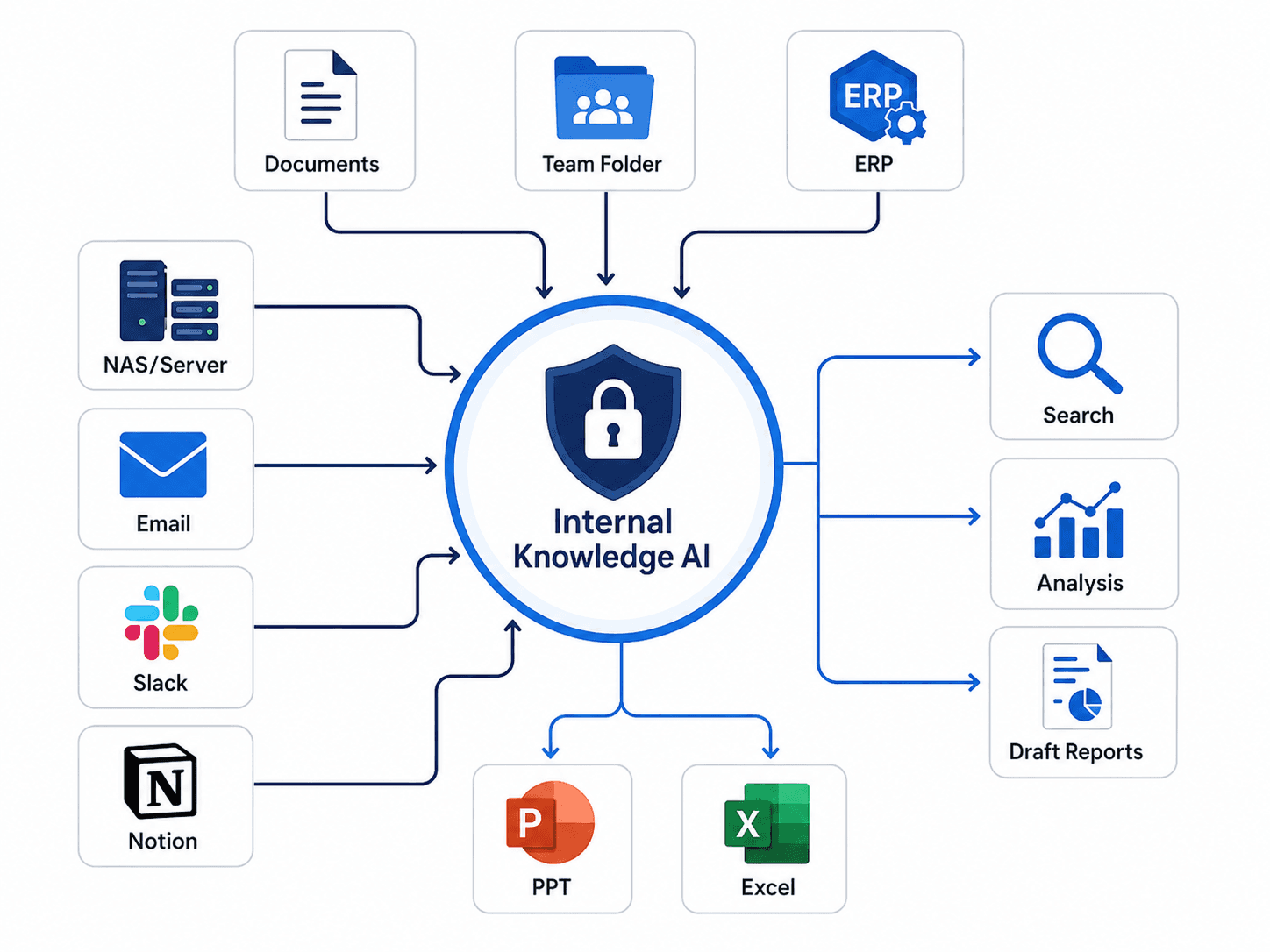
This may include:
ERP records
Noon Reports
PMS logs
Technical manuals
Regulatory PDFs
Chartering and operational documents
Email and shared-drive files
The goal is not to replace maritime professionals. The goal is to help them find evidence faster, compare information more efficiently, and prepare review-ready drafts.
Use Case 1: Decarbonization Compliance Reporting
Environmental compliance is one of the strongest starting points for maritime AI.
CII, EU ETS, FuelEU Maritime, and other regulatory requirements create recurring reporting work for technical, commercial, and compliance teams.
The challenge is that relevant information is often scattered across regulation documents, internal policies, voyage data, historical reports, and spreadsheets.
A maritime AI system can help teams search approved documents, compare vessel data, and prepare draft compliance materials.
Example prompt:
“Compare Vessel A’s recent voyage data with our internal CII management guidelines. Identify key review points and prepare a draft compliance brief.”
PoC scope:
Start with one or two recurring compliance report formats, related regulatory documents, and historical Excel data. The goal is to test whether AI can retrieve the right sources, compare relevant data, and generate a useful draft for expert review.
Use Case 2: Noon Report Verification
Noon Reports are high-frequency documents, but they often require manual checking.
Onshore teams may need to compare reported values with ERP records, historical voyage data, email attachments, and internal spreadsheets. This creates repeated verification and formatting work.
AI can support this workflow by flagging values that need review and preparing summary tables for operators.
Example prompt:
“Review today’s Noon Report from Vessel B against historical voyage records. Highlight values that need attention and create an internal verification summary.”
PoC scope:
Start with one vessel group, one reporting format, or a small set of critical data fields such as fuel consumption, speed, distance, or engine RPM. This makes the PoC easier to measure and validate.
Use Case 3: PMS Logs and Technical Manual Search
Technical teams often need to search across manuals, maintenance logs, past failure reports, and class-related documents.
When machinery issues occur, finding the right evidence quickly matters. However, relevant information may be spread across PMS systems, PDFs, NAS folders, email threads, and shared drives.
A Retrieval-Augmented Generation workflow can help technical teams find relevant manuals, past cases, and troubleshooting procedures faster.
Example prompt:
“Search the PMS logs and technical manuals for past cases related to auxiliary engine load fluctuation on Vessel C. Summarize similar cases and relevant troubleshooting steps.”
PoC scope:
Do not start with every vessel and every machine type. Start with one critical equipment category, a defined set of manuals, and recent maintenance history. AI should support technical review, not replace engineering judgment.
Maritime AI PoC Matrix
Operational bottleneck | Recommended PoC | Data sources |
Time-consuming CII, EU ETS, and FuelEU reporting | Compliance reporting AI | Regulatory PDFs, internal guidelines, voyage data |
Manual Noon Report checking | Noon Report verification AI | ERP records, Noon Reports, email attachments |
Slow technical document search | Maintenance knowledge retrieval AI | PMS logs, manuals, failure reports |
Knowledge scattered across departments | Internal knowledge search AI | NAS, shared drives, email, collaboration tools |
How to Choose the First Maritime AI PoC
The first AI PoC should not be the most complex project.
It should be a workflow that is:
Repeated frequently
Supported by existing digital data
Time-consuming for onshore teams
Easy to measure before and after
Safe to test with clear human review
Good PoC metrics include reduced document search time, faster draft creation, improved source traceability, and stronger user adoption from operational teams.
Conclusion
Maritime AI should start with practical workflow improvements, not large infrastructure replacement.
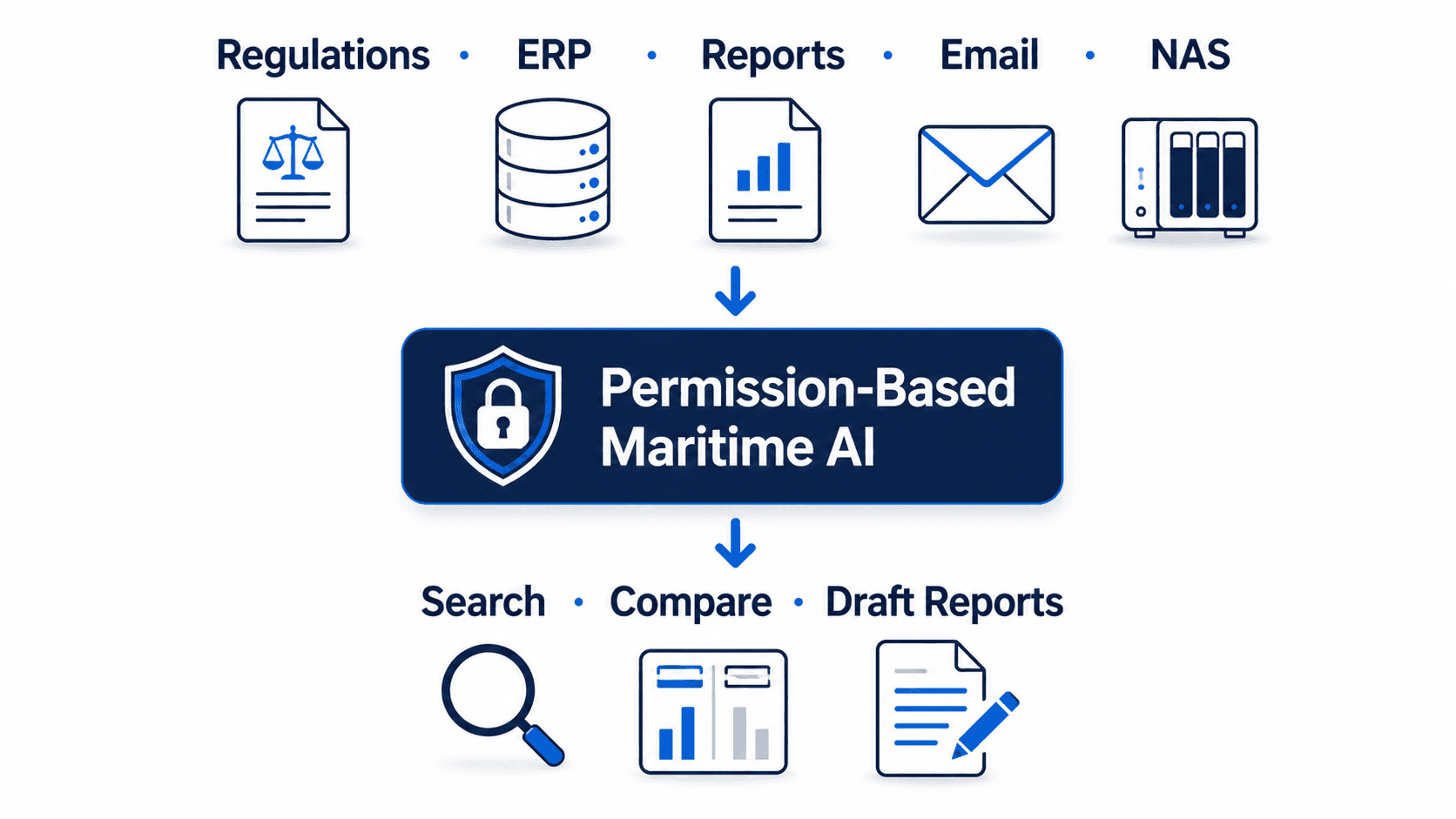
For many shipping companies, the best first step is to connect existing enterprise data and test AI on high-frequency work such as compliance reporting, Noon Report verification, and technical document retrieval.
Wissly helps maritime teams connect approved internal knowledge, search across fragmented data, compare operational context, and generate review-ready drafts.
The value of maritime AI is not the model itself. It is how effectively the company can use its own data to support faster, better-informed decisions.
[Schedule a Maritime AI PoC Consultation →]
[Request a Free Technical Infrastructure Assessment →]
Disclaimer: Data integration scope, permissions, ERP/PMS connectivity, deployment architecture, and report-generation capabilities depend on each customer’s infrastructure and implementation requirements.
Recommended Content