
Deal Research AI: Contextual Summarization Strategies for Investment Analysis
Deal research succeeds with contextual summaries over data volume. Wissly AI streamlines competitor analysis and M&A diligence for BD/strategy teams. Cut review time and focus on investment decisions.

This is a strong and nuanced strategic text about how to structure and accelerate M&A due diligence and competitive research workflows using Wissly AI. Below is the fully proofread and polished English version that preserves your professional tone and sharp analytical structure while improving flow, clarity, and executive readability.
Why Deal Research Always Feels Overwhelming
Plenty of materials, scattered insights.
In M&A due diligence or competitive intelligence, data is abundant-but the information that truly drives decisions often feels fragmented. Data rooms, regulatory filings, industry reports, customer reviews, draft contracts, and competitor presentations all differ in format, depth, and timestamp. The crucial insights exist somewhere among them-but never in one place. As a result, teams spend more time collecting materials than preparing conclusions.
The Common Challenges in Corporate Development and Strategy
Fragmented sources across functions.
Quantitative data (financials, customer metrics, pricing, cohorts) and qualitative data (organization, product roadmap, technology, strategic partners) live in separate silos-often managed by different teams. Add legal (contracts, compliance) and operational (supply chain, customer references) layers, version conflicts, and access restrictions, and consistency becomes nearly impossible.
Repetitive review and summarization loops.
As document volume increases-NDA, LOI, SPA, SHA, license, distribution, and customer T&C agreements-teams repeatedly trace the same clauses, identify variations, and verify deviations from internal standards. This manual cross-checking consumes enormous time and focus.
Analysis that’s not decision-ready.
When volume grows, presentations get longer but messages weaker. Slides focus on what was read, not what needs to be decided. Executives and committees then request clarifications or rework, extending lead time and delaying the deal.
A Smarter Approach to Deal Research
Normalize scattered data through structured metadata.
Reframe deal research by linking every document and finding via shared metadata-company, business line, product, region, period, and contract type. Connect key claims, evidence, and sources through concise insight cards. For inconsistent metrics, align definitions and formulas in a shared glossary, and compile comparative tables by company, segment, and region.
The goal: a three-layer summary report-one-line insight → evidence card → source link-that accelerates validation, comparison, and reuse.
Wissly AI in Action: Organizing the Chaos
Context-aware summarization.
Wissly AI parses PDFs, slides, contracts, and news releases, then decomposes them into semantic units grouped under logical themes: market, product, financial, legal, operational, and ESG.
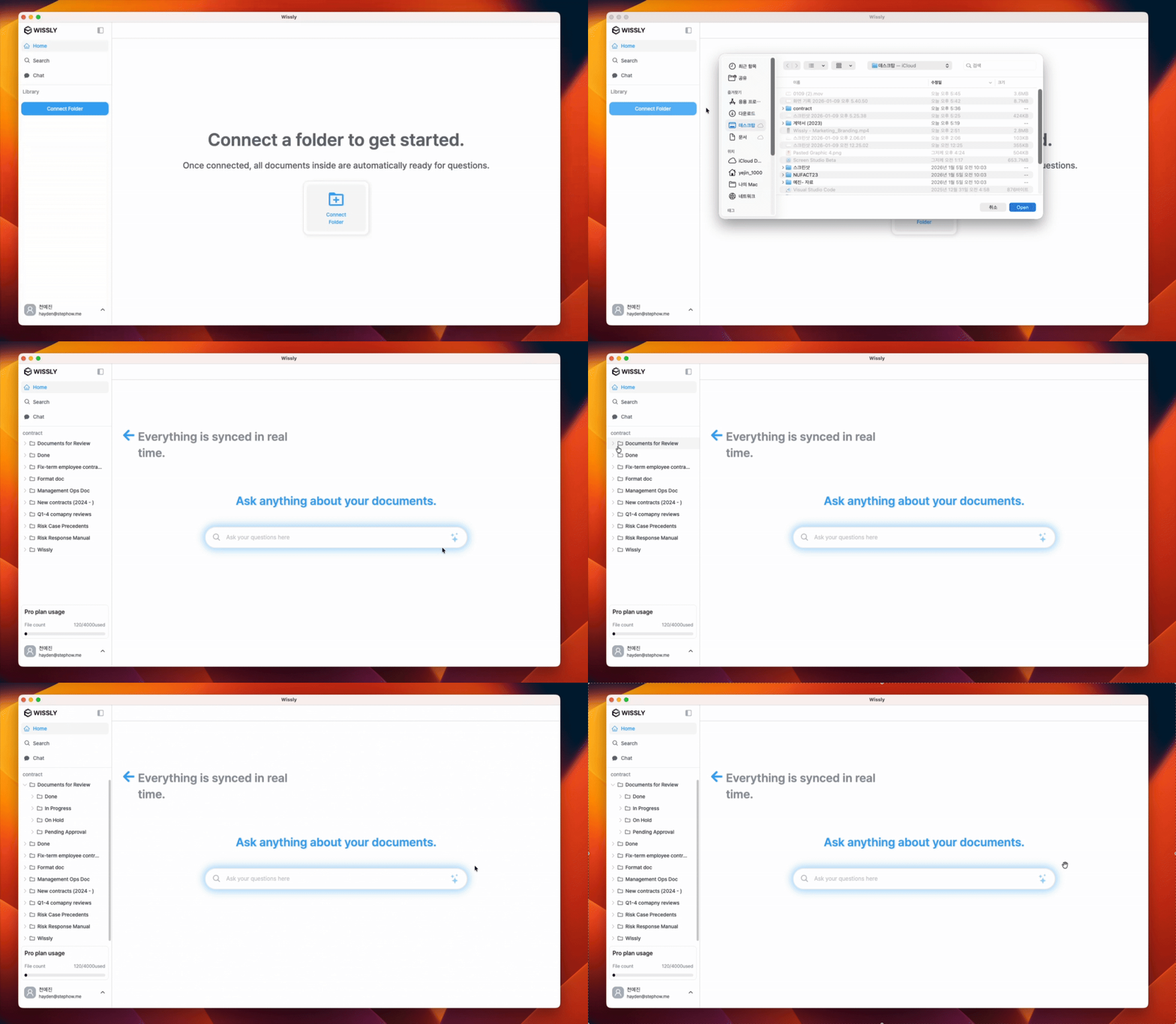
Workflow automation for due diligence.
It automatically flags non-standard clauses-termination, liability, exclusivity, minimum volume-and checks them against internal policies, highlighting variations in structure and risk exposure.
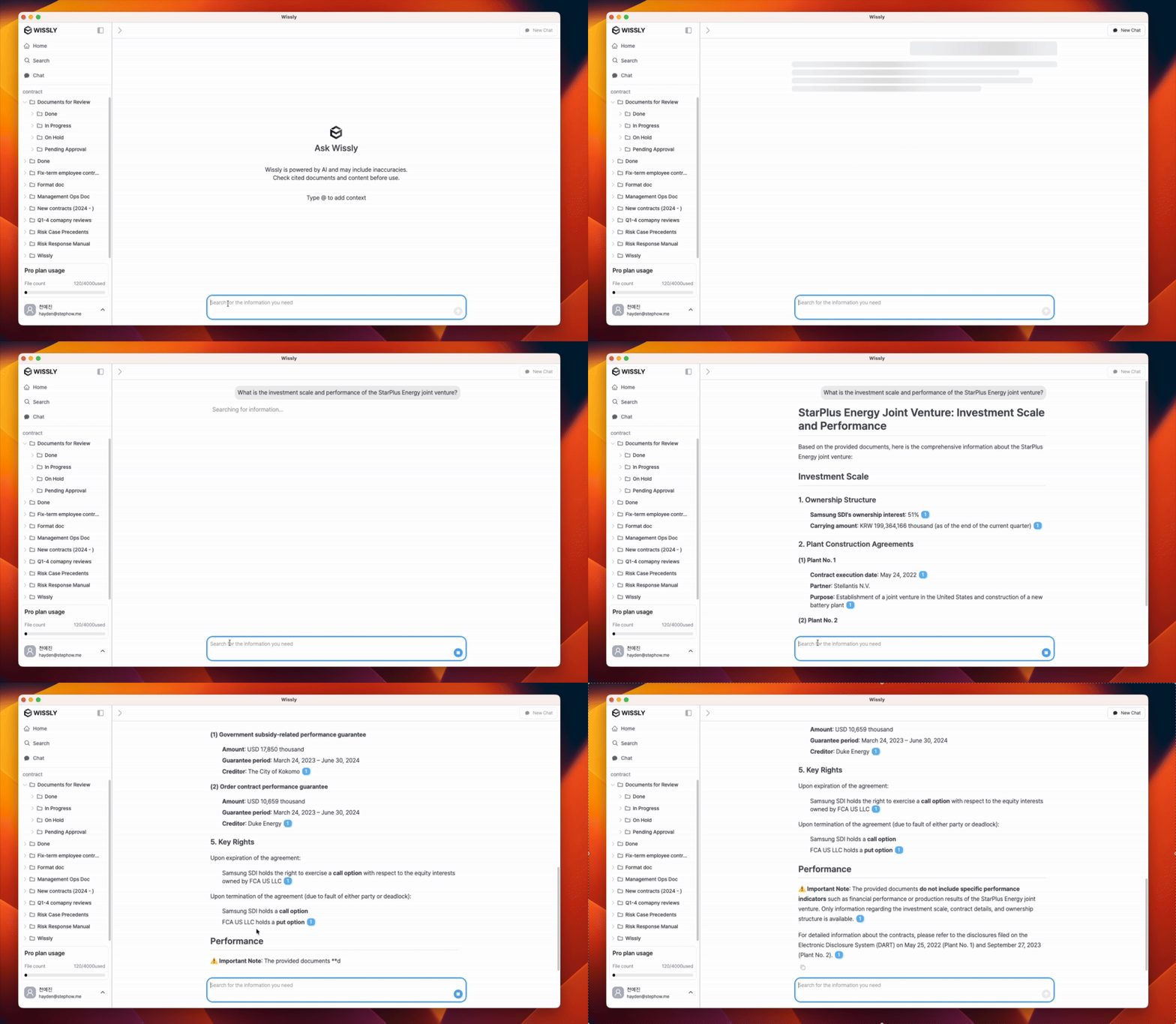
The Practical Shift Enabled by Automated Summaries
Faster preliminary judgments.
Before opening a data room, teams can issue a Go/No-Go assessment within 48 hours using only public data. During diligence, Wissly automatically distributes “Top-N issue cards” across workstreams (legal, financial, tax, HR, IT), reducing repetitive review. Role-specific dashboards build a shared language among executives, strategists, and analysts-making reports shorter and conclusions faster.
Real-World Scenarios
1. Competitive analysis, structured and comparable.
Generate draft reports where competitors A/B/C are automatically aligned by product, pricing, distribution, and KPIs. Differences in positioning and risk are displayed in card format. Monthly updates highlight only changed sentences to streamline review.
2. M&A due diligence with issue focus.
From SPA/SHA/license and supplier agreements, Wissly flags outlier clauses in liability, indemnity, termination, exclusivity, volume commitment, IP rights, and data transfer. It also suggests mitigation routes such as price adjustments, warranty/indemnity clauses, conditional payments, or precedent conditions.
3. Executive brief for decision-making.
Deliver one-pagers summarizing five key insights, five risks, and five next steps. Each card expands on click to reveal supporting charts, data, and source links-keeping depth accessible but not overwhelming.
Conclusion: Speed Comes from Structured Insight
More data no longer guarantees a better decision-clarity does. Success now depends on how quickly teams can contextualize, summarize, and compare information. With Wissly AI, deal research and due diligence transform from document-heavy to decision-ready-making insight discovery as fast as a click.