
Prior Art Search: A Practical Guide to AI-Based Methodology for Patent Pros
Master prior art searches from filing to invalidation using AI. This practical methodology for patent attorneys and R&D teams covers semantic search, and Wissly AI workflows to cut time and boost judgment quality.

In the patent lifecycle-covering patent applications, OA (Office Action) responses, negative declarations of scope, invalidation trials, and litigation risk assessment-the quality of your search dictates the quality of your strategy. The goal is not merely "finding more" but organizing data quickly, comprehensively, and in a decision-ready format.
This guide presents a practical methodology for patent attorneys, practitioners, and consultants, introducing a streamlined workflow from Search to Organization to Opinion Drafting using AI-assisted tools.
1. Why Prior Art Search is Increasingly Challenging
1-1. The Dilemma of Search Scope
The starting point of any search is defining the boundaries: "How wide and how deep?" The density and reliability of results depend on how you combine IPC/CPC, keywords, and semantic queries. Incorrect initial boundaries lead to missed art regardless of later analysis. Conversely, an overly broad scope causes review costs to skyrocket. Success requires a "Broad Initial Exploration → Focused Zoom-in" structure.
1-2. Practical Pressure: "The Fear of Missing Out"
The persuasiveness of an opinion or invalidation brief is tested by one question: "Is there any better prior art?" Practitioners face immense pressure to provide reproducible search logs and clear selection criteria within limited time and budget. The risk of missing a single critical document often leads to defensive, over-excessive manual reviews.
2. Structural Limitations of Traditional Methods
2-1. Search Gaps
Keyword and classification-based searches are vulnerable to synonyms, euphemisms, and neologisms. A slight change in terminology can push a critical document outside the search net.
2-2. Invisible Non-Structured Data
Patent specifications are strategic. Identical functions may be generalized into "modules" or hidden within "embodiments." Traditional searches often miss non-structured cues like figure captions, tables, formulas, and experimental conditions.
2-3.Inefficient Review Time
The real bottleneck isn't "finding" but "comparing and organizing." Manually mapping dozens of documents against claim elements can take weeks, often making the search results outdated by the time the report is finished.
3. How AI-Powered Search Fills the Gaps
3-1. Semantic Search Mastery
AI utilizes semantic embeddings to identify technologies with similar functions and effects, even if the keywords don't match. By indexing non-structured elements, it maximizes Recall (minimizing omissions) by including peripheral technologies often missed by traditional tools.
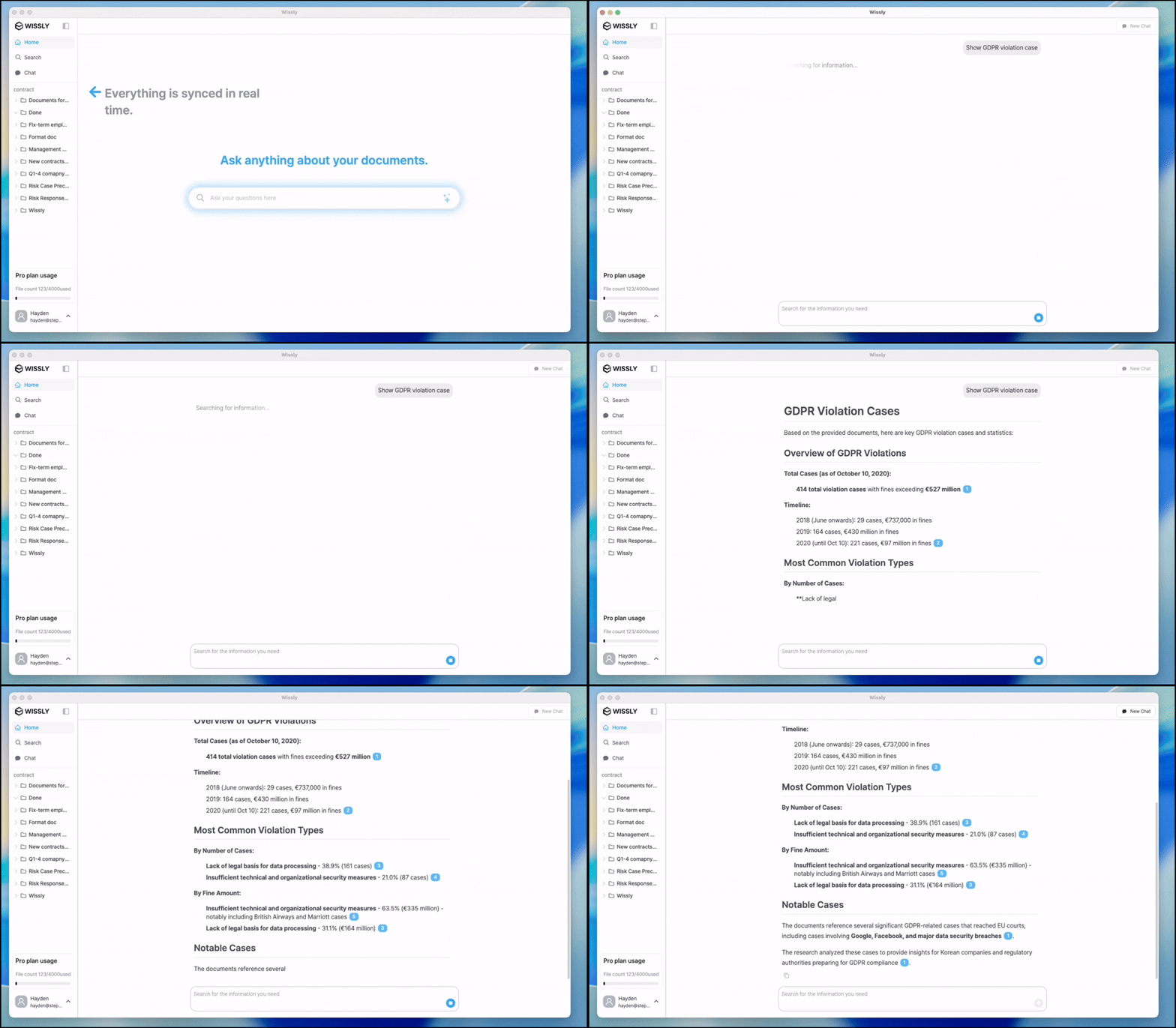
3-2. Automated Summarization & Comparison
AI automatically organizes candidate documents into snippets mapped to specific claim elements and flags their exact location (page, paragraph, figure). This shifts the practitioner's role from "data gathering" to high-level judgment on novelty and non-obviousness.
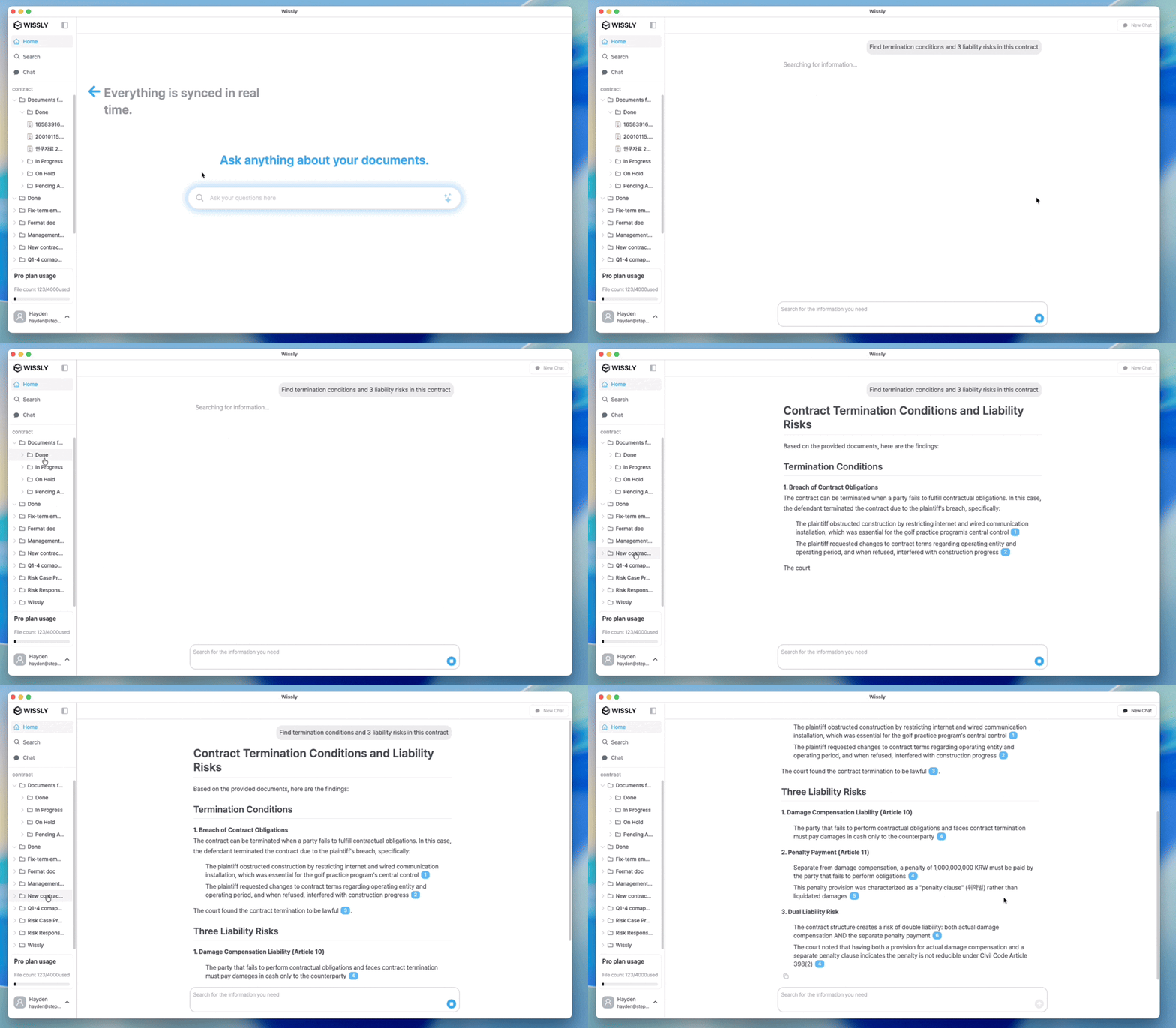
3-3. Decision Support Tools
AI provides the raw material and structure for decisions. It offers similarity-based clustering to visualize the technical landscape and suggests potential combinations (e.g., combining Feature A' from Reference 1 with Feature B' from Reference 2) while providing the verifiable evidence needed for legal arguments.
4. Traditional vs. AI-Powered Methodology
<table><tbody><tr><td><p><strong>Category</strong></p></td><td><p><strong>Traditional Search</strong></p></td><td><p><strong>AI-Powered Search (Wissly)</strong></p></td></tr><tr><td><p><strong>Search Basis</strong></p></td><td><p>Keywords / IPC / CPC</p></td><td><p>Natural Language / Semantic-based</p></td></tr><tr><td><p><strong>Terminology</strong></p></td><td><p>Vulnerable to synonyms/euphemisms</p></td><td><p>Captures functional/effect similarity</p></td></tr><tr><td><p><strong>Non-Patent Art</strong></p></td><td><p>Requires separate search silos</p></td><td><p>Integrated (Papers, Standards, Reports)</p></td></tr><tr><td><p><strong>Screening</strong></p></td><td><p>Manual filtering of 100s of results</p></td><td><p>Auto-summarization & Similarity ranking</p></td></tr><tr><td><p><strong>Organization</strong></p></td><td><p>Manual Claim Charts (Time-intensive)</p></td><td><p>Auto-generated Snippets & Charts</p></td></tr><tr><td><p><strong>User Role</strong></p></td><td><p>Responsible for Search + Org + Judgment</p></td><td><p><strong>Focus on Strategy & Legal Judgment</strong></p></td></tr></tbody></table>Judgment Matters More Than Search
A superior search is defined by how quickly evidence is transformed into a comparable and logical array. When broad semantic exploration meets precision claim-level mapping, the quality of the legal strategy improves exponentially.
Using allows you to rapidly refine massive amounts of literature and automatically secure the structure for judgment. This enables a practical revolution: Minimize search time, maximize the depth of judgment.
The core of modern methodology is not about opening more search tabs-it is about securing a better organizational structure to reclaim your time for professional strategy.